KEY TAKEAWAYS
- Pole barns and post frame are essentially the same building system at different points in history.
- Original pole barns use round poles; modern post frame uses engineered laminated square posts.
- The terms are often used interchangeably today, even though post frame is the modern approach.
- Post frame is capable of more than a true pole barn ever was—wider spans, architectural finishes, and far more use cases.
- What matters most is the post material, the foundation, and the engineering, not the name.
If you’ve searched both “pole barn” and “post frame building” to find the difference after hearing both terms used to describe the same building, you’re not alone—and the confusion is reasonable, since post frame builders themselves use the terms inconsistently. Here’s the simple answer: you’re looking at the same approach to construction at two different points in history. What follows in this article is why the newer variation (post frame) came to be, what actually changed structurally over time, and what to look for instead of the name on the quote.
“The name didn’t change on its own—innovation drove the change. ”
Where Did the Term “Pole Barn” Come From?
The term dates back to early-to mid-20th-century agricultural buildings, where farmers set round posts—often repurposed utility poles—directly into the ground to support a simple framing structure. The pole barn was a practical solution to the economic hardships of the 1930s Great Depression because they were often DIY built, making it fast, cheap, and effective for basic sheltered storage buildings. The name stuck because poles were the defining visual feature of the building.
What Actually Changed
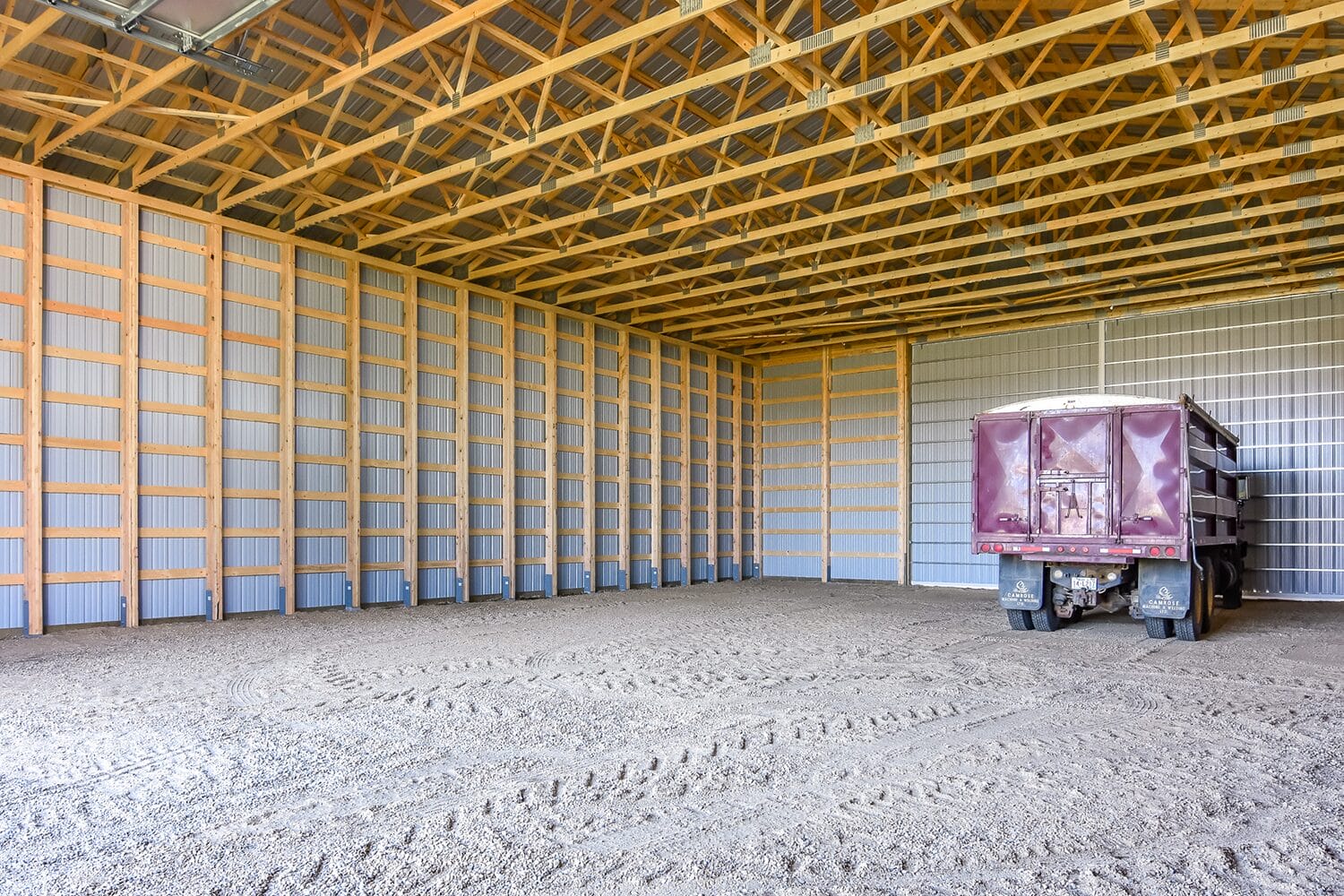
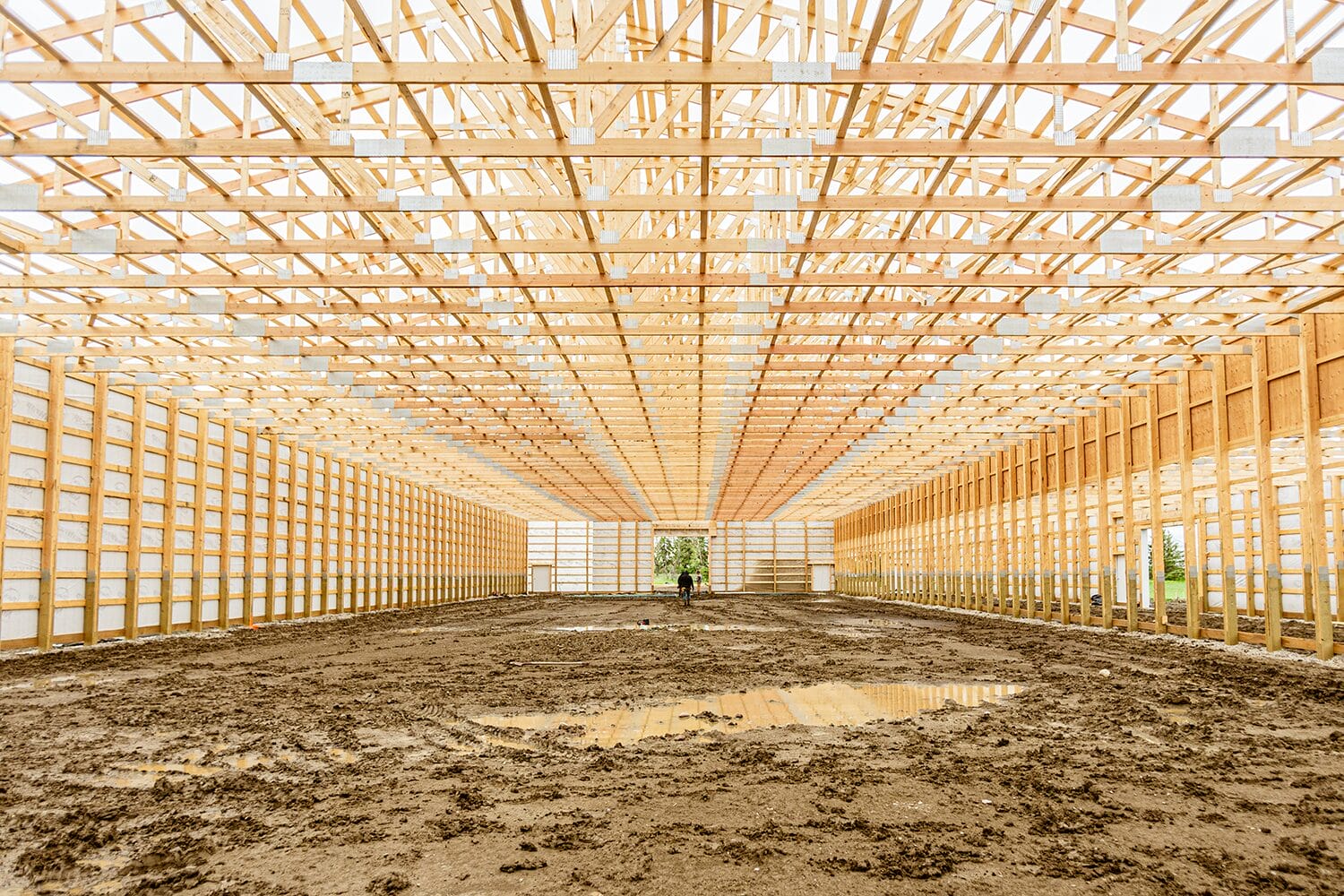
As the method evolved, round poles gave way to engineered, laminated square posts—multiple layers of dimensional lumber glued together for greater strength than the repurposed utility poles offered. Those superior posts, paired with engineered roof trusses, purlins, and girts, are designed to meet modern building codes for snow, wind, and structural loads. A modern post frame building is a meaningful evolution of a 1950s pole barn, even though the basic concept—posts carrying the structure instead of a continuous concrete foundation wall—is the same.
Today, most builders have shifted to “post frame” specifically to signal that evolution and move the method away from the misconception that they “just build farm buildings”. Even though the underlying structural system remains just as well-suited to agricultural buildings as modern applications like shop houses, horse arenas, and acreage accessory buildings.
What Post Frame Can Do That a True Pole Barn Couldn’t
This is where the distinction actually matters to rural property owners. A true pole barn with round poles, minimal engineering, and an uneven dirt floor was commonly built for one job: basic shelter and storage on farms. Today’s post frame system is built on the same concept, but incorporates modern engineering and materials to redefine rural construction:
- Wider Spans & Bigger Builds: Engineered laminated posts and trusses support clear-span widths that a pole barn was never designed to carry.
- Architectural Finishes: Modern post frame buildings incorporate upgraded finishes and designs that are considerably more impressive than basic, square pole barns.
- More Diverse Use Cases: Large commercial buildings, equestrian facilities, and modern country homes now use post frame construction—well beyond the storage-shed reputation of pole barns.
- Durable In-Ground Foundations: Modern post frame offers engineered foundation options like protective sleeves or concrete piers to improve longevity.
None of that was available from an actual, traditional pole barn that originated in the 1930s. It was only made possible once the system and concept had modern engineering behind the posts, trusses, and foundations. While pole barns were an effective approach in the past, post frame offers the scale, flexibility, and strength to meet the needs of today’s farms and rural properties.
“The concept never changed. The materials and capabilities got better.”
So What Should You Actually Be Asking?
Whichever term you search, a knowledgeable builder understands exactly what you mean. What matters isn’t the word—both are interpreted in terms of modern capabilities—it’s what’s being proposed once you start talking specifics:
- What is the foundation approach? Posts embedded directly in the ground, posts set on concrete piers, or posts with protective sleeves are all legitimate options depending on soil, moisture, and budgets. You should know which your building needs and why.
- Is it engineered for your region’s snow and wind loads? True regardless of what the building is called. A properly engineered post frame building meets the same code requirements as any other construction method.
The Bottom Line
Technically, “pole barn” and “post frame building” describe the same building system at two different points in its history. What’s changed since the term “pole barn” was coined is real — the materials, the engineering, and what the system is capable of have all moved forward meaningfully, which is exactly why the industry shifted to “post frame” as the more accurate name for what’s actually being built today.
Practically, though, that distinction rarely shows up in how people actually talk. “Pole barn” and “post frame” get used interchangeably, and both are understood to mean the same thing: a modern, engineered building, not a round pole set in dirt.
Remuda Building has designed and built custom post frame buildings for farms, acreages, and rural properties across Alberta, British Columbia, and Saskatchewan since 2014. Explore our diverse range of projects in our portfolio.
FAQ About Pole Barn vs. Post Frame Buildings Comparisons
Not inherently. Assuming both are built to the modern post frame standard, “pole barn” and “post frame” describe the same building — the same engineered laminated posts, foundation approach, and materials — so pricing is identical. Cost differences come from build quality, post material, and design choices, not from which name the builder uses.
Most modern builders, including Remuda Building, build exclusively with engineered laminated posts rather than round poles, since laminated posts offer more consistent strength and longevity. If a builder is still using true round poles, ask directly about the engineering and expected service life compared to laminated alternatives.
No — foundation approach (posts embedded directly in ground, posts on concrete piers, or protective sleeve systems) is a separate decision from which name is used for the building. Both terms can apply to any of those foundation methods.
No, and this one is a genuine distinction, not just terminology. Post & beam uses heavy timbers and traditional joinery for an exposed structural look, typically for a different aesthetic and use case. Pole barn and post frame both refer to the engineered laminated-post-and-truss system described above — a different structural approach from post & beam entirely.