
Craig Shand
Client Stories
“We couldn’t be happier with the end result! From the sales team, to the top notch construction crew… we have nothing but good things to say!”
Craig Shand
Owner, Shand Farms

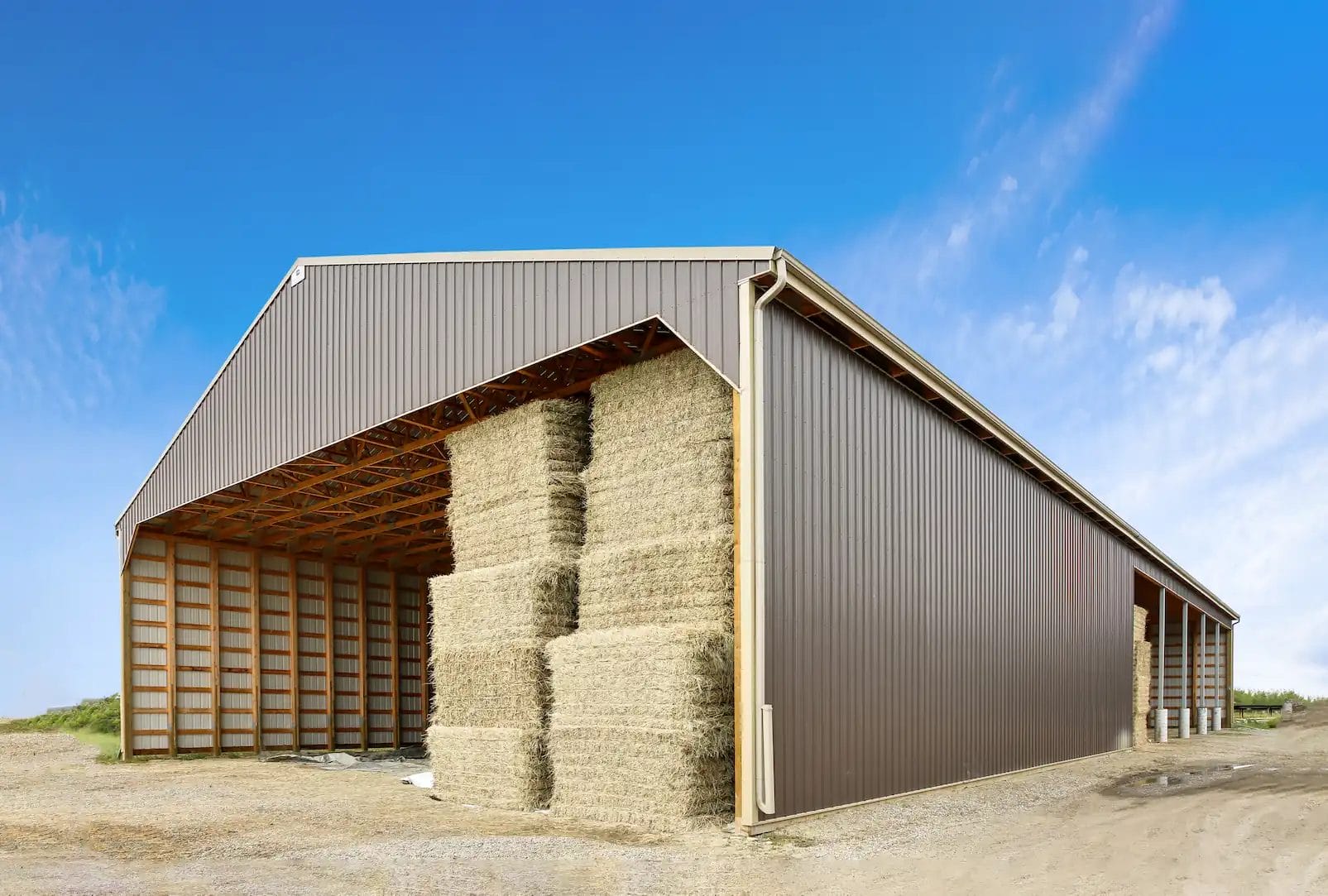
Hay stored improperly quietly costs you money in spoilage, nutrient loss, and feed that doesn’t go as far as it should. A well-built hay storage building changes that, protecting your investment from Western Canadian precipitation.
Whether you’re storing hay in Alberta, BC, or Saskatchewan to feed cattle through long winters or keeping horse feed fresh, the cost of poor storage adds up fast. Moisture, wind-driven rain, and improper ventilation degrade the quality of your inventory and create avoidable costs whether you’re running a farm or keeping horses.
A purpose-built hay shed or hay barn eliminates those costs by protecting quality, extending the life of your feed, and giving you a storage solution that makes a real difference.

Hay storage needs for crop farmers, ranchers, and equestrians are all different. Our personal approach to hay shed construction means your building is tailored to the way you farm, your property, or the way you care for your animals, making your daily routines run smoother.
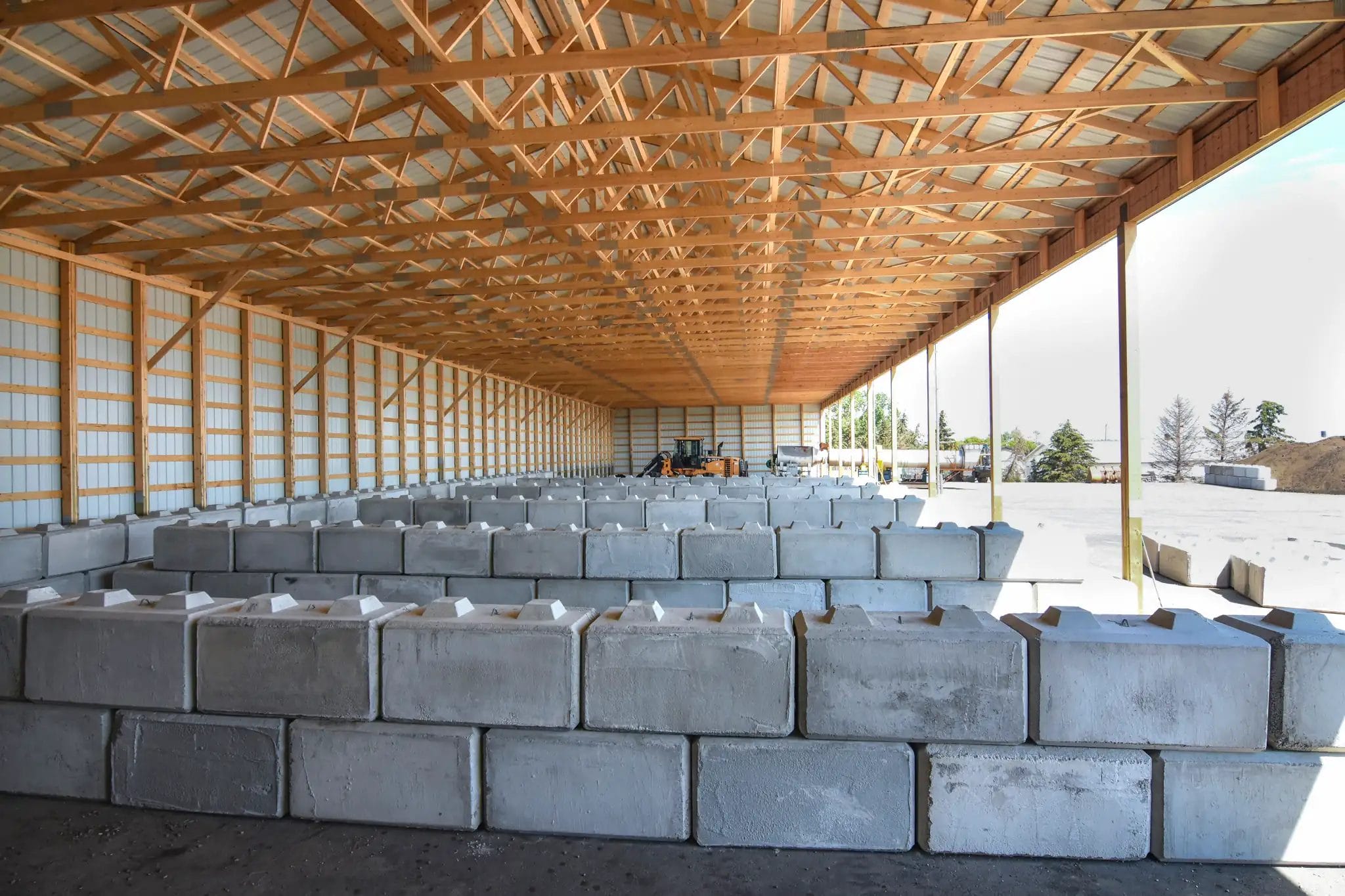
Open-sided hay sheds promote consistent natural airflow, which is one of the most effective tools for managing moisture in stored bales. Fully enclosed hay barns provide a higher level of protection from driving rain and snow, keeping feed drier on exposed rural properties.
The right choice depends on the environmental factors of your site, balancing protection, ventilation, and cost.

Getting hay in and out of storage effortlessly matters whether you’re moving round bales with a tractor or managing square bales by hand. Clear interior spans, well-planned post spacing, and properly sized openings make it easy for equipment to move freely.
Drive-through layouts and access points on multiple sides reduce handling time and make moving hay a chore you don’t dread.
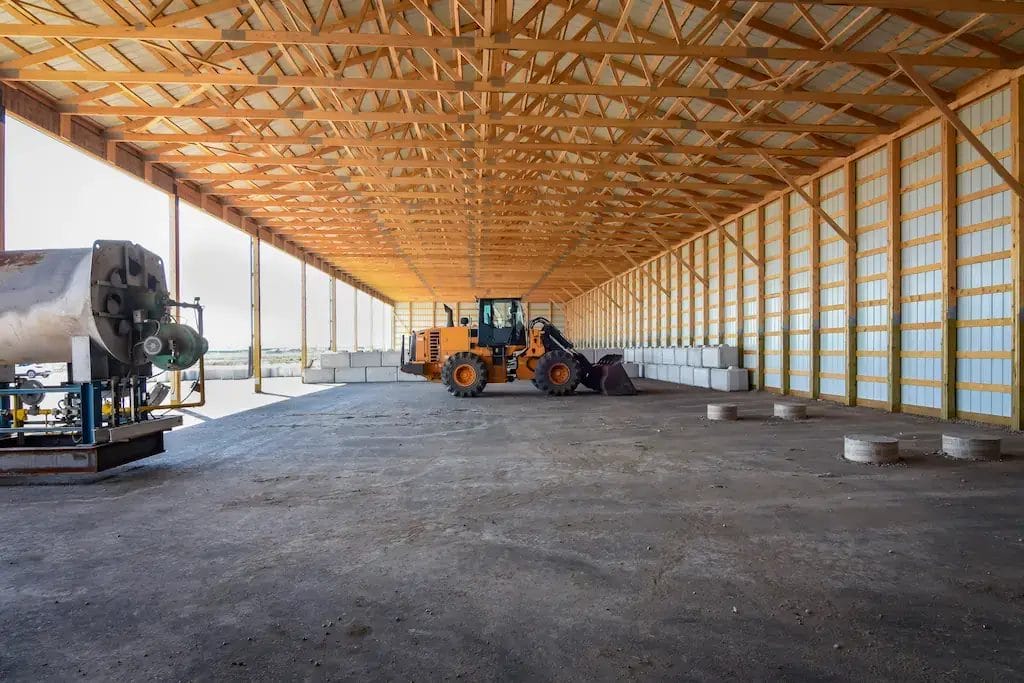
Bigger herds and bigger harvests mean more hay to manage than the year before. Post frame hay storage buildings are straightforward to expand, adding length and capacity without requiring major structural changes or starting over with a new building.
Explore recent examples of our custom post frame hay sheds and hay storage buildings built across Western Canada in Alberta, BC, and Saskatchewan.
Building a hay storage building is a significant investment in your animals, your operation, and your property. Our planning resources are designed to help you make informed decisions well before hay shed construction starts, so you can move forward with confidence.
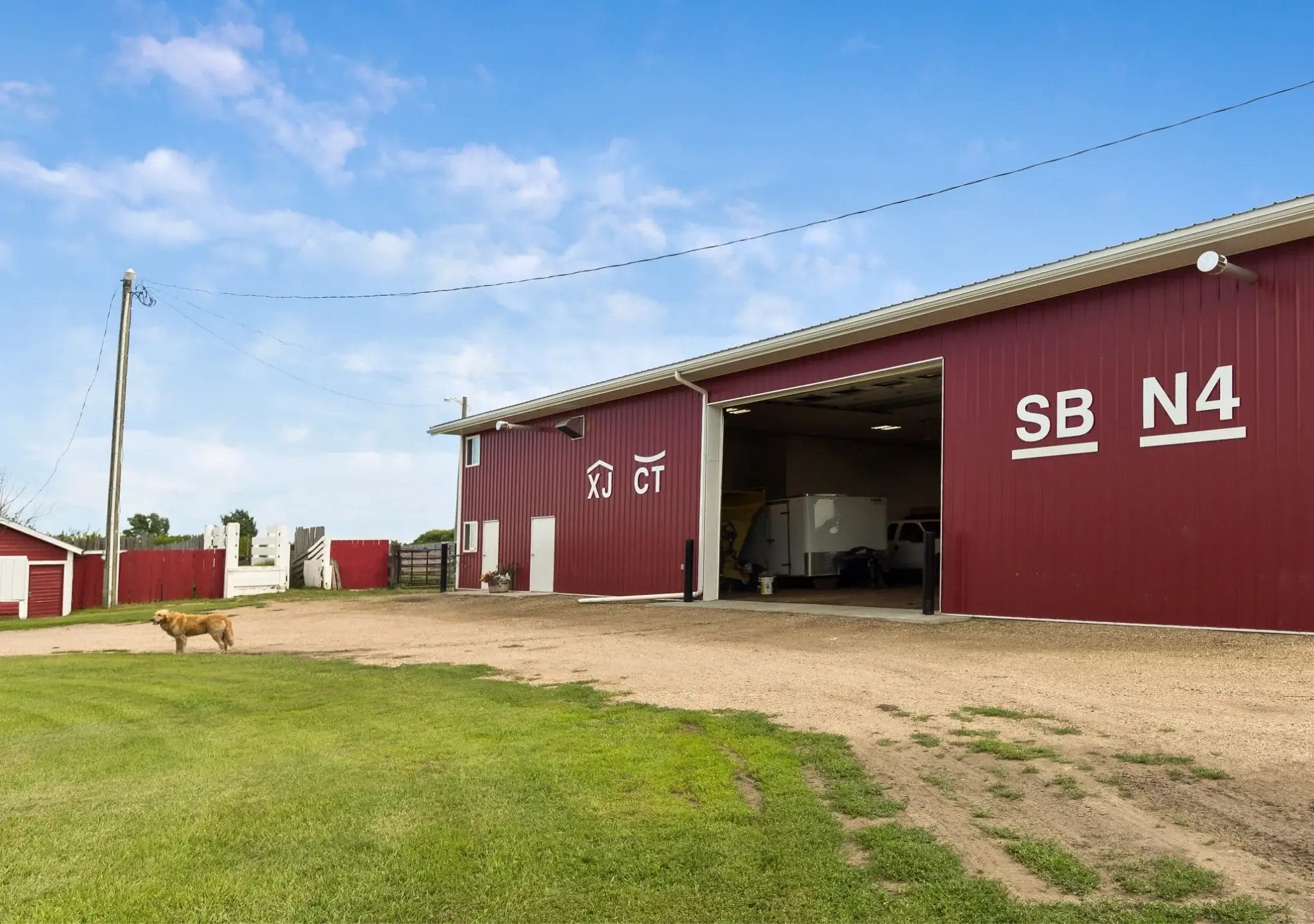
Keep livestock comfortable and healthy in a purpose-built barn for cattle, sheep, or poultry farms.

Custom horse barns designed around your daily chores and the comfort of horses, with features and finishes that create timeless designs.

Ride on even the coldest, windiest, rainy days with a custom indoor riding arena built specifically for your discipline and the way you ride.
Craig Shand
Owner, Shand Farms

Jeremy Blocksom
Acreage Owner

Sonja Pfeiffer-Alves
Business Owner

Robert Fasoli
Home Owner

John Adonyi
Business Owner

The right size depends entirely on the volume of hay stored, bale type (round or square), and inventory turnover, and should be decided on a case-by-case basis. The storage needs of a large farm operation vary greatly from those of a personal equestrian property. In either case, hay storage buildings range from small footprints to extremely large footprints and can fit a wide range of operations.
Proper hay storage is about controlling moisture in bales, which is the primary cause of spoilage and nutrient loss. Well-designed structures balance shelter from precipitation with airflow to help maintain quality over time.
For a full breakdown of how hay storage buildings protect against moisture and why it matters, read our recent blog.
Yes. Ventilation is critical to managing moisture and preventing condensation. While natural airflow in open-sided hay shelters provides proper ventilation, enclosed hay barns may need to integrate mechanical ventilation, such as exhaust fans.
Although the two terms can be used interchangeably, a hay shed typically refers to an open-sided structure. A hay barn, on the other hand, is usually fully enclosed.
Neither option is universally better than the other. Rather, each approach moisture management and airflow in different ways, and the best choice depends on your needs, plus site exposure, climate, and budget considerations.
A reputable post frame builder with experience in hay sheds and hay barns can provide a recommendation based on your operation.
Hay shed costs in Canada vary based on size, design, finishing level, and site conditions. An open-sided structure sits at a different price point than a fully enclosed hay barn, and building size is the single biggest driver of cost in either case.
Regional engineering requirements across Alberta, BC, and Saskatchewan also shape the final design in ways that affect cost. The most reliable number is the one provided by an experienced hay shed builder after a conversation about your specific property and storage needs.