


Sonja Pfeiffer-Alves
Client Stories
“I chose a Remuda building because of the customer service. From the first phone call, they wanted to make sure they got every detail right.”
Sonja Pfeiffer-Alves
Business Owner

For horse owners and equestrian businesses in Western Canada, the riding season ends long before your desire to ride does. An indoor horse riding arena changes that by giving you comfortable temperatures, consistent footing, and the freedom to ride, train, and run clinics when you want, not just when the weather allows.
A well-built post frame equestrian arena supports your passion and gives you a facility you’re proud to ride in, proud to welcome people to, and proud to have on your property.

Every rider’s needs are different. Our personal approach to riding arena construction means your building is designed around your horses, your riding, and your property to make every second spent riding something you’ll look forward to.

The right horse arena dimensions, rooted around the type of riding you do sets the entire project up for success so the space lives up to your lofty expectations. Get it right, and daily riding feels natural. Get it wrong, and the building never feels quite right.
From small arenas for private lessons to large ones spanning up to 112’ wide, we will get you covered.

With a new riding arena, you’ll spend plenty of time indoors with your horses, including early mornings and late nights. The interior of your building should feel intentional and built for that from the start.
An insulated building holds comfortable temperatures throughout Western Canadian seasons. Dedicated spaces for tacking up, viewing, loafing, and storage can all be built in, making your daily routines run without friction.

Above all else, you care about the safety and well-being of your horses. Good riding arena designs account for that in every detail, so you can ride and train without worry.
Kick walls guard against hoofs that could damage or puncture the building, protecting both the structure and horses. 4′ wide walk-doors let you move horses without stress or tight squeezes. Every detail contributes to an environment that prioritizes safety and health.

Every horse owner knows the feeling when your horse locks onto a shadow in the corner, changing the ride in an instant. Proper lighting can fix that.
A well-lit indoor horse arena combines natural and artificial light for even, shadow-free coverage across the entire riding surface. You’ll appreciate consistent light through early mornings, late evenings, and the short winter days that define riding in Alberta, BC, and Saskatchewan.

The best riding arenas go beyond providing a place to ride. They bring the entire rhythm of horse ownership into one connected space.
An attached barn, integrated stalls, tack rooms, wash bays, grooming areas, and offices built into your riding arena plans make every chore your equestrian lifestyle demands simpler, quicker, and easier to check off your to-do list.
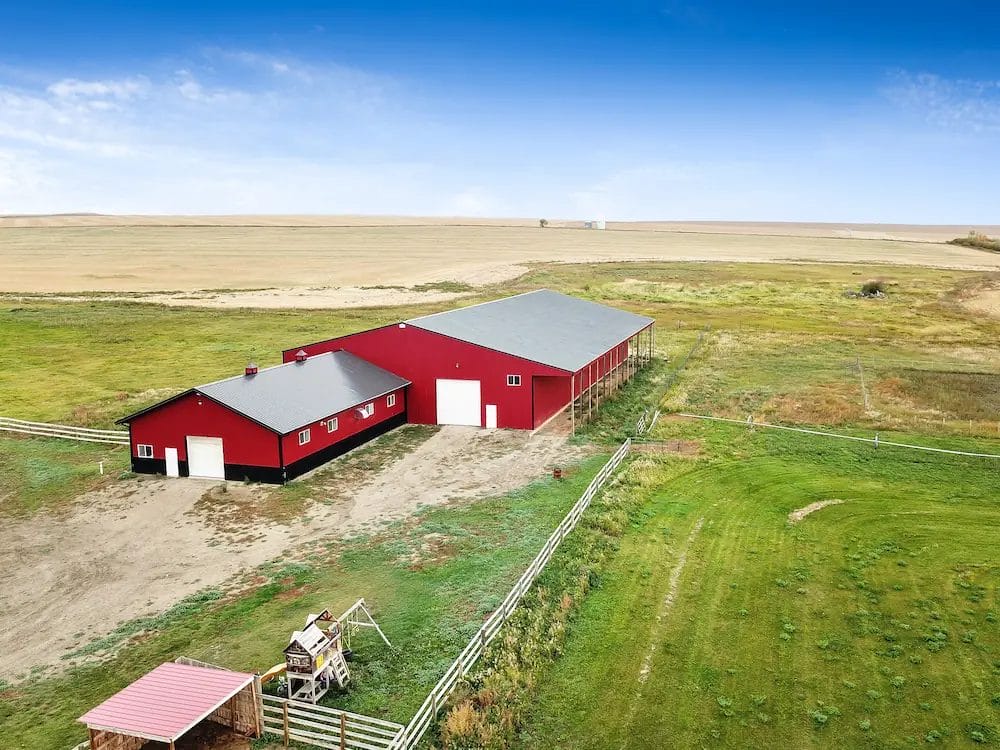
Explore recent examples of our custom post frame equestrian riding arenas built across Western Canada in Alberta, BC, and Saskatchewan.
Building an indoor riding arena is a significant investment in your riding, your horses, and your property. Our planning resources are designed to help you make informed decisions well before riding arena construction starts, so you move forward with confidence.

Custom horse barns designed around your daily chores and the comfort of horses, with features and finishes that create timeless designs.
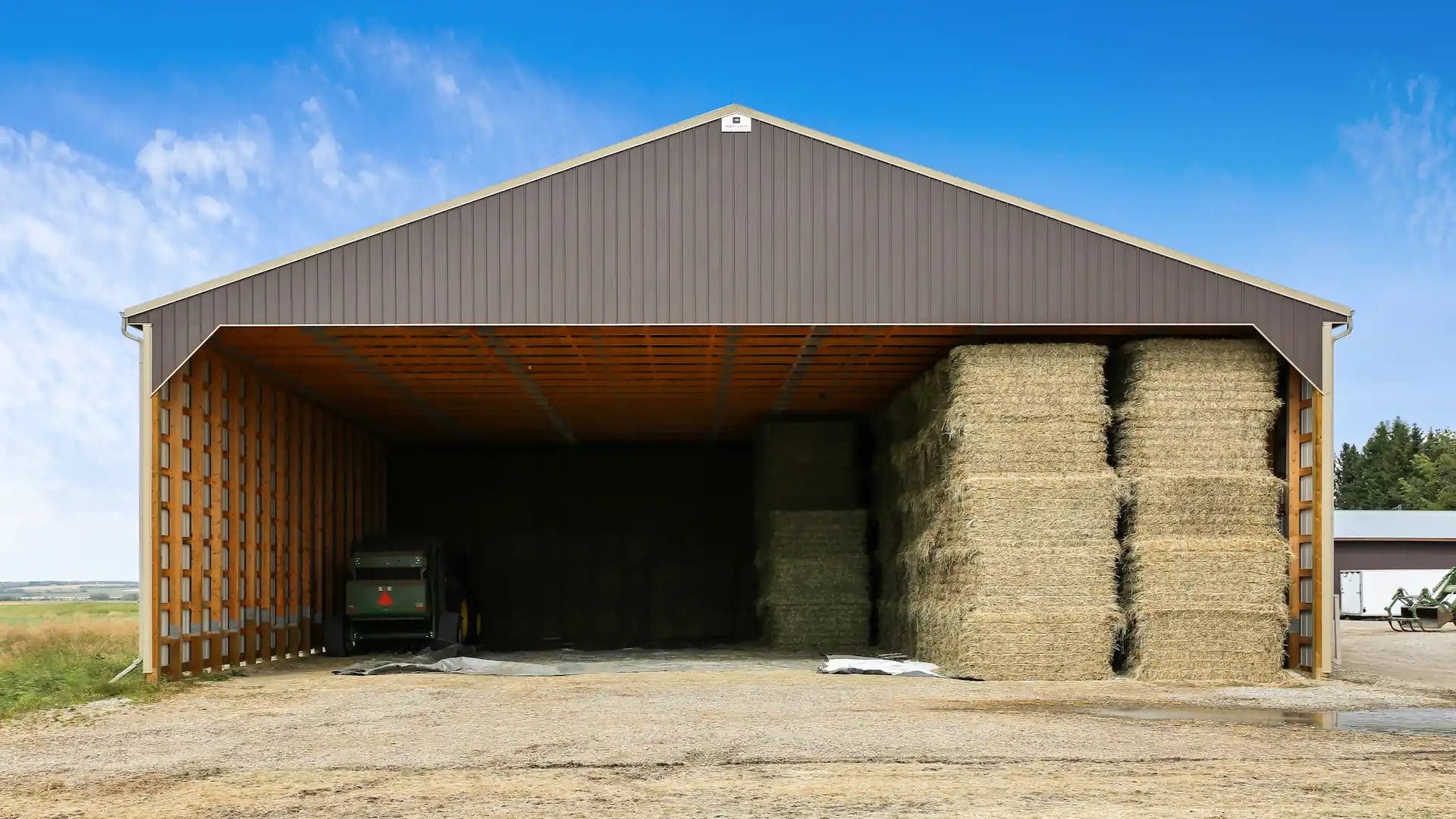
Extend the life of your hay and feed by protecting it from moisture to reduce the cost of spoilage.
Sonja Pfeiffer-Alves
Business Owner

Craig Shand
Owner, Shand Farms

Jeremy Blocksom
Acreage Owner

Robert Fasoli
Home Owner

John Adonyi
Business Owner

The cost to build an indoor riding arena in Canada varies based on size, location, finishing level, and overall design complexity. A basic uninsulated arena sits at a much lower price point than a large, heated equestrian facility that incorporates horse stalls and other premium features.
Besides the building itself, site preparation and footing material represent a part of the total investment. The most reliable number is the one provided by an indoor riding arena builder that is specific to your property and plans.
Riding arena dimensions depend on discipline, the number or riders and horses using the building at one time, and several other considerations. In general, post frame riding arenas start at 60’ x 120’ x 16’ for general flatwork or riding and can extend to 100’ x 200’ x 20’ or larger for show jumping training and disciplines that need more space.
Getting riding arena dimensions right from the start is one of the most consequential decisions of the entire project. We work through these decisions with every client across Alberta, BC, and Saskatchewan.
A post frame or pole barn riding arena is an indoor equestrian arena built using post frame construction — the same structural system behind most modern farm buildings across Western Canada. The terms are often used interchangeably, though post frame reflects the more engineered, modern approach that has largely replaced traditional pole barn methods.
What that means for your riding arena is significant. Engineered laminated posts and structural trusses span wider and stand stronger than round utility poles ever could — delivering the column-free interiors that equestrian use demands, without the limitations that made traditional pole barns a compromise.
Post frame construction is the standard for indoor riding arenas across Western Canada because it solves the two problems that matter most in equestrian building — span and strength. Wide, column-free interiors up to 112 feet give horses and riders the full space to work.
Beyond the span, post frame riding arenas are engineered for the environmental demands of rural Alberta, BC, and Saskatchewan — heavy snow loads, wind exposure on open properties, and freeze-thaw cycles, meaning your arena is built to stand strong in the country.
Yes — and for most equestrian properties across Western Canada, it’s the decision that makes the whole facility work the way a horse property should. A connected barn means shorter distances and less exposure when moving horses between stabling and riding. It means the morning routine flows instead of requiring separate trips in separate directions. It means everything your horses need is in one place, considered as one plan.
Depending on your county or insurer, combining building uses under one roof can add complexity to approvals or coverage — but it’s common, it’s manageable, and it’s worth understanding before you build rather than after. We’ll walk you through what applies to your property so nothing catches you off guard.