KEY TAKEAWAYS
- Outdoor hay storage can result in substantial losses, with weather exposure commonly reducing dry matter content and feed value.
- The outer layer of a round bale is highly vulnerable; losing the outer 6 inches to spoilage can translate to losing 33% of the total feed.
- Moisture is the primary driver of spoilage, accelerating nutrient loss, mould growth, and creating conditions for spontaneous combustion.
- Poor storage impacts both quality and quantity, forcing livestock producers to feed more or supplement diets to get the same results.
- Elevating bales and improving airflow significantly reduces losses, even in outdoor or lower-cost storage setups.
- Covered storage consistently delivers the best outcomes, preserving more dry matter and nutritional value compared to outdoor or tarped storage.
Hay is a valuable asset to farmers and horse owners. Whether it’s being sold after harvest or being fed to livestock, the right hay shed builders understand that proper storage matters to your bottom line. Rain, snow, ground moisture, and sun can quickly reduce feed quality, dry matter, and nutritional value in hay. For livestock farmers, hay growers, and equestrians, the negative effects of outdoor storage are measurable, making tarps and hay barns or sheds a smart farm building or equestrian building investment that can pay for itself in a matter of years.
In this article, we explain why proper hay storage matters to Canadian farmers and horse owners, helping you feel confident that building a storage shed could be a smart decision for your operation.
“Proper hay storage matters because it preserves higher nutritional value and market value to protect your animal health and bottom line.”
What Happens When Hay Isn’t Stored Properly
While keeping hay stored in fields or uncovered stacks is an attractive option to avoid the high up-front costs of building a shed or barn, the costs of exposure end up impacting your bottom line even more drastically over time.
Moisture Drives Rapid Spoilage
When hay is exposed to precipitation and ground moisture during storage, it begins to spoil and deteriorate from the outside in. Bales subjected to rain and snow absorb significant moisture in outer layers, triggering a cycle of decay. This costly problem only gets worse the longer bales are left exposed, as progressive rot moves deeper into the core. The result is substantial dry matter loss, where the initial volume of the bale breaks down and vanishes.
In a standard 6-foot round bale, the outer 6 inches contains roughly 25% to 33% of the total feed. When that outer layer spoils, you are losing up to one-third of your investment.
Lost Nutritional Value
Improper hay storage doesn’t just create spoilage and surface rot. Exposure to moisture and precipitation causes a rapid decline in the availability and digestibility of critical nutrients livestock need to maintain body condition and health.
- Dry Matter (DM) Loss: Microbes and fungi consume high-energy sugars and starches, physically reducing the amount of feed available.
- Total Digestible Nutrients (TDN) Plummet: Weathering targets the most digestible portions of hay, leaving behind only the “filler”.
- Crude Protein Levels Decline: As soluble nutrients leach out through rain and snow cycles, the protein density of the remaining hay drops significantly.
Research has quantified the effects of outdoor hay storage over a single winter, and the results help paint a picture of why proper hay storage matters: 18% loss in bale weight, 28.6% drop in TDN, and energy content loss up to 50%.
Mould & Risks to Animal Health
Exposed hay that becomes moist creates a perfect environment for mould and fungal growth. The implications of mouldy hay extend far beyond feed quality and introduces a significant risk to your livestock’s health.
- Respiratory Compromise: Inhaling mould spores can lead to chronic respiratory conditions in cattle and horses.
- Mycotoxin Threats: Certain mould strains can produce secondary metabolites known as mycotoxins. Even in small quantities, these can cause digestive upset, colic, suppressed immune systems, and reproductive issues in livestock.
Spontaneous Combustion & Fire Risk
When hay is stored outdoors and is compromised by rain and ground moisture, it creates a volatile chemical environment within the bale. This isn’t just a source of rot and decreased nutritional value; it is a significant safety risk that can result in notable financial losses.
Microbial processes in bales with high moisture levels create rapid internal heating that can lead to spontaneous combustion and fire risk. The financial implications could be substantial because a hay fire can spread to the entire stack or surrounding machinery or infrastructure.
The True Cost of Poor Hay Storage
Poor hay storage is often treated like a manageable inconvenience because losses occur gradually. That misconception is exactly what makes it expensive over time. You lose bale weight, digestible nutrients, protein availability, and market premiums paid for barn-stored hay.
Dry Matter Loss Quickly Becomes a Profitability Problem
Dry matter loss is the clearest and most visible way to see the impacts of sub-optimal storage. It’s also the easiest to understand. If the outer 6-inches of a 6-foot round bale is lost to spoilage, it loses one-quarter to one-third of its total feed. In other words, you lose 25% to 33% of your investment simply from poor storage—a completely avoidable loss.
On a 500-ton hay inventory, a 25% loss is equivalent to 125 tons. For livestock farmers, that loss represents feed that must be replaced. For hay producers, it directly translates to lost revenue.
Livestock Producers & Horse Owners Pay Twice for Storage-Related Losses
For livestock producers and equestrians, poor hay storage solutions that leave hay exposed create a double cost that is harder to quantify. The first cost is the lost bale weight and dry matter disappearance that leaves bales with less feed overall. The second, less obvious cost is the drop in nutritional quality that must be addressed with higher feeding rates or diets that must be supplemented with more expensive inputs just to maintain the body condition and production that would have been possible with properly stored hay.
Hay Growers Lose Revenue & Profitability
For hay growers selling their product, the cost of poor storage solutions translates directly to the bottom line. Outdoor-stored hay loses bale weight and appeal quickly as buyers evaluate hay on colour, visible damage, and smell. In fact, indoor versus outdoor hay storage significantly impacts the market price per bale, and growers who store in a barn or shed can afford to charge a premium.
How Proper Hay Storage Protects Your Operation
Proper hay storage is fundamentally about moisture control to protect against lost profits, lost feed quality, and lost bale weight. The goal is to prevent hay from reabsorbing moisture in the months that follow harvest. That means sheltering it from precipitation, encouraging airflow, and limiting ground contact.
Keeping Hay Off the Ground
Ground contact is one of the most damaging and preventable causes of hay-related losses on a farm. Bales sitting directly in the soil absorb moisture. That bottom spoilage often goes unnoticed until bales are moved, but it can destroy a meaningful portion of the bale. Elevating bales above the soil dramatically reduces losses.
Even modest upgrades, like gravel pads, pallets, old tires, or railway ties can materially improve the rate of dry matter loss by interrupting ground moisture transfer and helping bales dry faster after precipitation.
Airflow Protects & Preserves Stored Hay
The distinction between a sheltered space and a dry space is important for hay storage. While a building might block precipitation, if it traps humidity, it can still create losses. Rather, a space with proper airflow helps residual moisture escape and prevents condensation buildup. That’s why a naturally ventilated, open-sided hay shelter is so common and effective.
Proper Hay Storage Preserves Feed Value
One of the biggest advantages of indoor hay storage is not only that more hay remains, as measured by bale weight and dry matter. It’s that more of the original quality and nutritional value remains. Covered storage preserves digestibility, crude protein, and nutritional content. For feeders, this means less spoilage, less supplementing, and better cost control.
In summary, proper hay storage protects all aspects of value, guarding your operation from the damaging effects high moisture content has on stored hay.
- Quantity: More dry matter retained
- Quality: More feed value and market value retained
“The distinction between a sheltered space and a dry space is important when talking about hay storage. While a building might block precipitation, if it traps humidity, it can still create losses.”
Popular Options for Proper Hay Storage
Proper hay storage is not a one-size-fits-all discussion and not every operation benefits equally. The right solution depends on inventory volume and how long hay is going to be stored.
Outdoor Storage with Best Practices
Outdoor storage is the lowest upfront-cost option and can still be a viable solution for many farms and equestrian properties, provided you adhere to best practices for outdoor hay storage.
- Site Conditions: Bales should be placed in a well-drained location, preferably elevated on pallets, old tires, or a similar solution to eliminate ground contact.
- Bale Wrapping: With outdoor storage, consider plastic or net-wrapping bales. Both methods generally help reduce damage compared to loose or twine-wrapped bales.
- Orientation: Avoid tall stacks or pyramids that retain moisture. Instead, arrange bales in single, end-to-end rows with a few feet between each row.
This approach can work for lower-value hay, short-term winter feed, or inventory that will be sold or consumed quickly. Outdoor storage is a weaker fit for operations that hold inventory for long periods or use hay as a main source of feed.
Tarped Storage
Tarps are a meaningful step up from open outdoor storage, especially when paired with gravel bases, pallets, or other elevated options. Tarps effectively reduce direct exposure to rainfall and snow and can preserve a greater share of dry matter over the season when used properly.
That said, issues with tarps can still arise. If hay bales are covered when too wet, tarps can have adverse effects—trapping moisture, heat, and preventing proper drying. In that case, tarps can actually promote greater spoilage and mould. Additionally, tarps can tear or loosen, causing them to be as ineffective as uncovered outdoor storage.
Hay Sheds & Storage Buildings
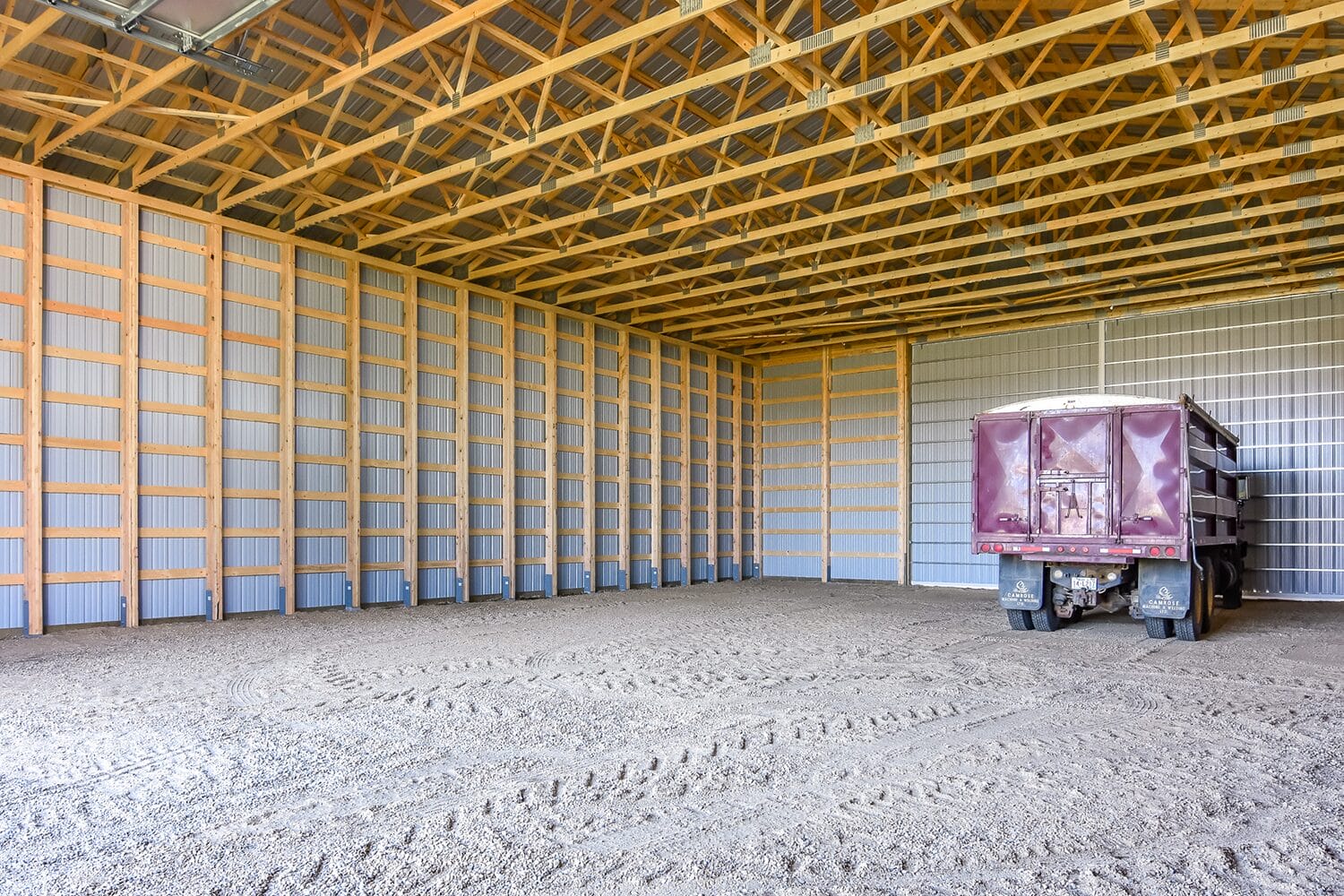
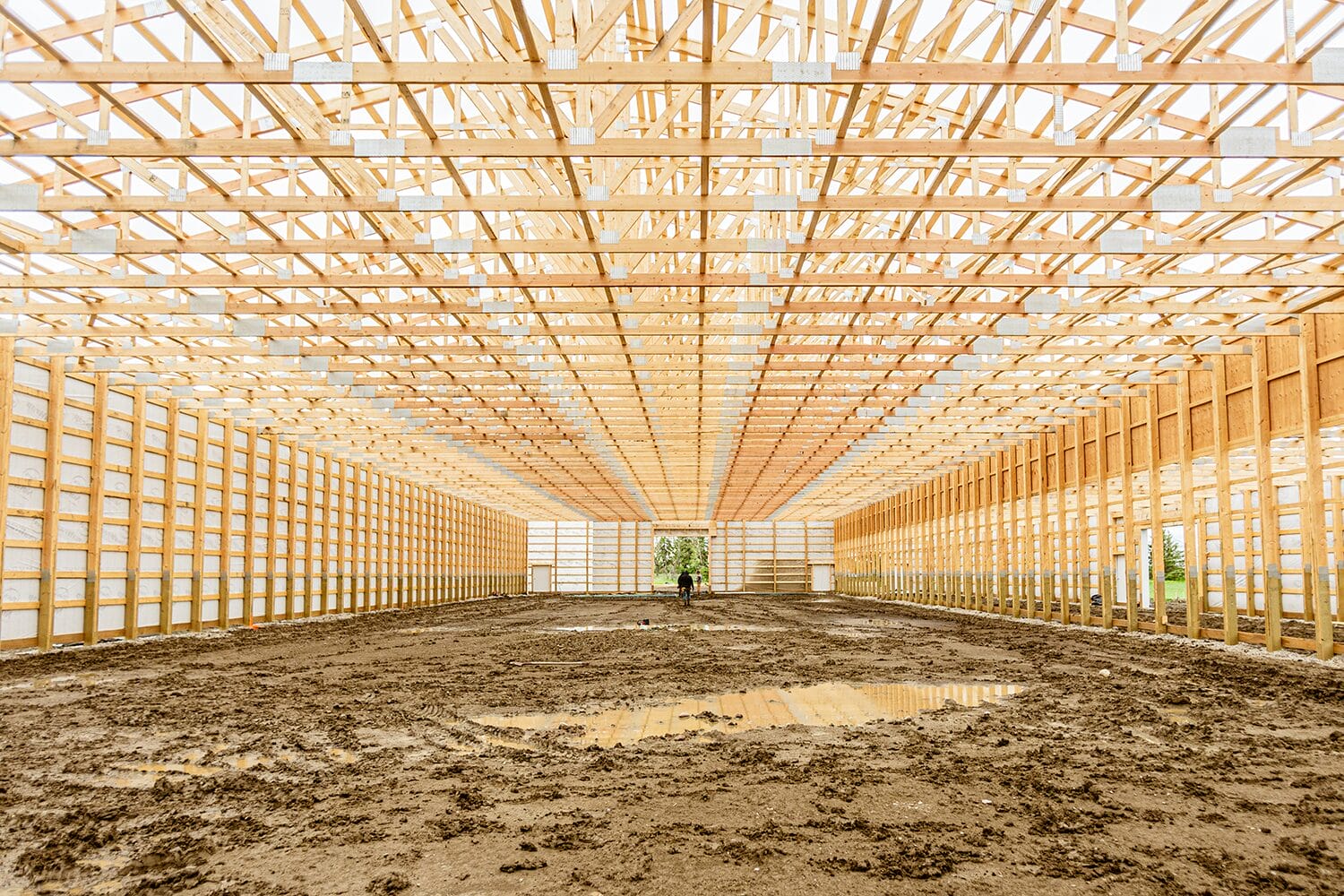
Hay sheds and storage buildings built with post frame construction consistently deliver the best hay storage outcomes, including the lowest losses and best preservation of quality. Inside storage generally reduces losses by about two-thirds compared with exposed outdoor storage. A good hay shed does more than keep precipitation at bay; it creates a controlled environment that properly manages moisture and promotes ventilation. The advantages of indoor storage for hay matter most when:
- Hay must retain high feed value
- Hay will be stored for many months
- Hay is intended for sale
Why Proper Hay Storage Matters: Indoor vs. Outdoor vs. Tarped Methods
The following chart presents possible outcomes of several hay storage methods. Though actual results are highly dependent on region, operation, and many other factors and should be used only as a guide to demonstrate the value of each method.
| Storage Method | Weight Loss (DM) | Nutritional Value (TDN) | Market Value |
| Outdoor Uncovered | 25%-35% | High Loss (20%-40%) | Deeply Discounted |
| Tarped & Elevated | 5%-10% | Moderate Loss (10%-20%) | Fair to Good |
| Open-Sided Hay Shed | 3%-8% | Low Loss (5%-15%) | High |
| Enclosed Hay Barn | 2%-5% | Minimal Loss (0%-10%) | Full Premium |
Start Protecting Your Hay Investment
The economics of hay storage become easiest to understand when losses are viewed as an operational cost rather than inconvenient and unavoidable. The reality is that hay is as much of an asset as it is an input when stored correctly. Although the best protection statistically comes from a pole barn for hay, the upfront investment and construction time make it a future solution. The good news is, you can start protecting your inventory today. Practical places to start are:
- Bale at safe moisture levels
- Elevate hay off the ground
- Follow stacking best practices
- Reserve the best protection available on your property for the highest value bales
- Begin planning a post frame hay shed or enclosed barn to get ultimate protection
Remuda Building designs and builds post frame hay sheds and feed storage buildings for farmers and horse owners across Alberta, British Columbia, and Saskatchewan—browse our portfolio to see past projects.