KEY TAKEAWAYS
- Effective livestock barn designs start with how your operation runs day to day.
- Each species of farm animal needs a slightly different approach to layout, airflow, materials, and environmental control.
- The most valuable features depend on your operation and the animals you raise.
- Post frame construction is a natural fit for building agricultural barns for cattle, sheep, pigs, and poultry.
- Properly designed and built, an agricultural barn significantly impacts the success and productivity of your animals.
Planning and designing a barn starts with understanding the demands of different operations. From the animals kept inside to how chores get done, each building should be designed for how it gets used. Layouts, airflow, access, and even materials play a role in improving efficiency and creating an environment where animals can thrive—and they shape how much value you get over the life of the building.
Many farmers begin their building journey by exploring standard barn plans, but the best designs reflect daily use, chores, and animal care through value-driven features. Livestock barn builders can create custom designs that bridge the gap between standard plans and the building your operation actually needs. From cattle barn layouts to sheep penning, this guide covers the must-have features for each type of farm animal.
“The features included in a barn set the stage for a successful operation and directly influence animal health, productivity, and smoother days.”
What Makes an Effective Barn Design for Livestock?
Built Around Your Workflow
An effective livestock barn is designed around how you accomplish your daily work. Feeding, cleaning, herd management, and equipment access all need to be planned from the start. Many standard plans fall short when they treat each operation the same and don’t account for your unique workflows.
Well-planned layouts, on the other hand, reduce bottlenecks and frustrations and improve efficiency across your entire operation.
Designed for Animal Health & Productivity
Air quality, temperature, humidity, and space all influence animal health and directly impact the productivity of your herd or flock. Poor ventilation can lead to moisture build-up, unregulated temperatures, and increased ammonia levels that add stress to animals (and damage the building itself).
The best barn designs prioritize airflow and create a healthy environment inside where your animals can thrive.
Durability That Stands Up to Rigorous Use
A barn used for livestock is a high-use, high-traffic building that is subject to premature wear and damage if not planned correctly. Interior finishes, wall systems, metal cladding, and structural components must withstand constant contact and wear.
Many designs now include reinforced materials and protective features that extend the life of the building and reduce maintenance time and repair costs.
“Standard sheep, cattle, poultry or swine barns can fall short of expectations when they don’t fit your farm operation.”
Cattle Barn Design: What Matters Most?
Space for Movement & Handling
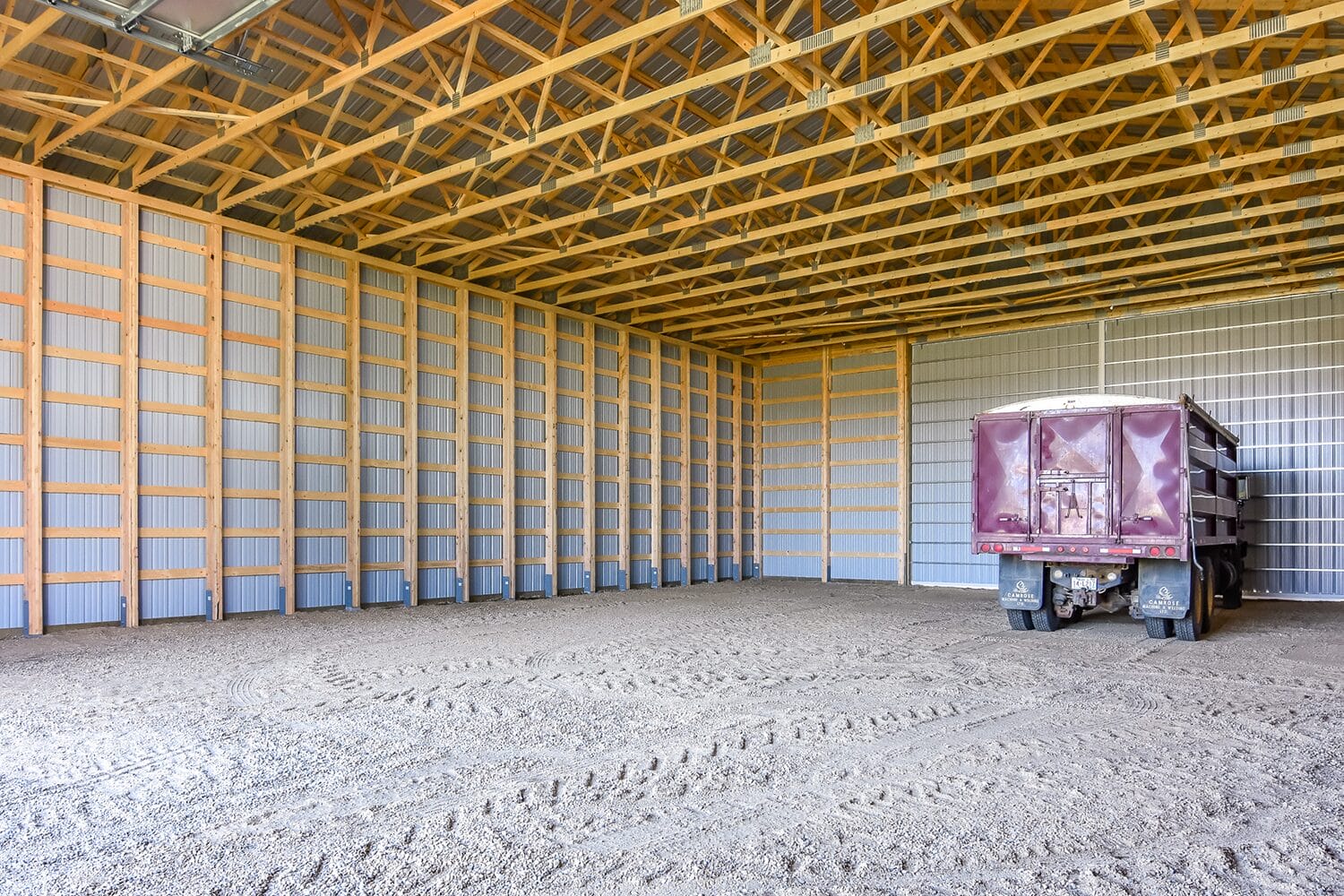
Cattle barn designs often begin with spacious layouts that include large alleyways and overhead doors to support safe handling, provide access to outdoor pens, and facilitate smoother cattle movement.
Early considerations include the overall footprint—making sure the interior is large enough for your herd—plus large alleys and functional pen layouts.
Ventilation for Herd Health
Managing moisture and airflow is critical in any beef barn. Temperature stress, respiratory issues, and high humidity work against milk production, weight gain, and reproductive success, making inadequate ventilation systems a hidden drain on your profitability.
Once the layout and footprint are finalized, plan ventilation to suit the size of the barn—the best results usually combine mechanical and natural airflow measures.
Equipment Access & Efficiency
Cattle barns that accommodate the machinery used for daily feeding, bedding, and cleaning run more efficiently.
Many layouts are built around full-length feeding alleys and large access points that let equipment move smoothly throughout the building.
Sleeping Quarters in Winter Calving Barns
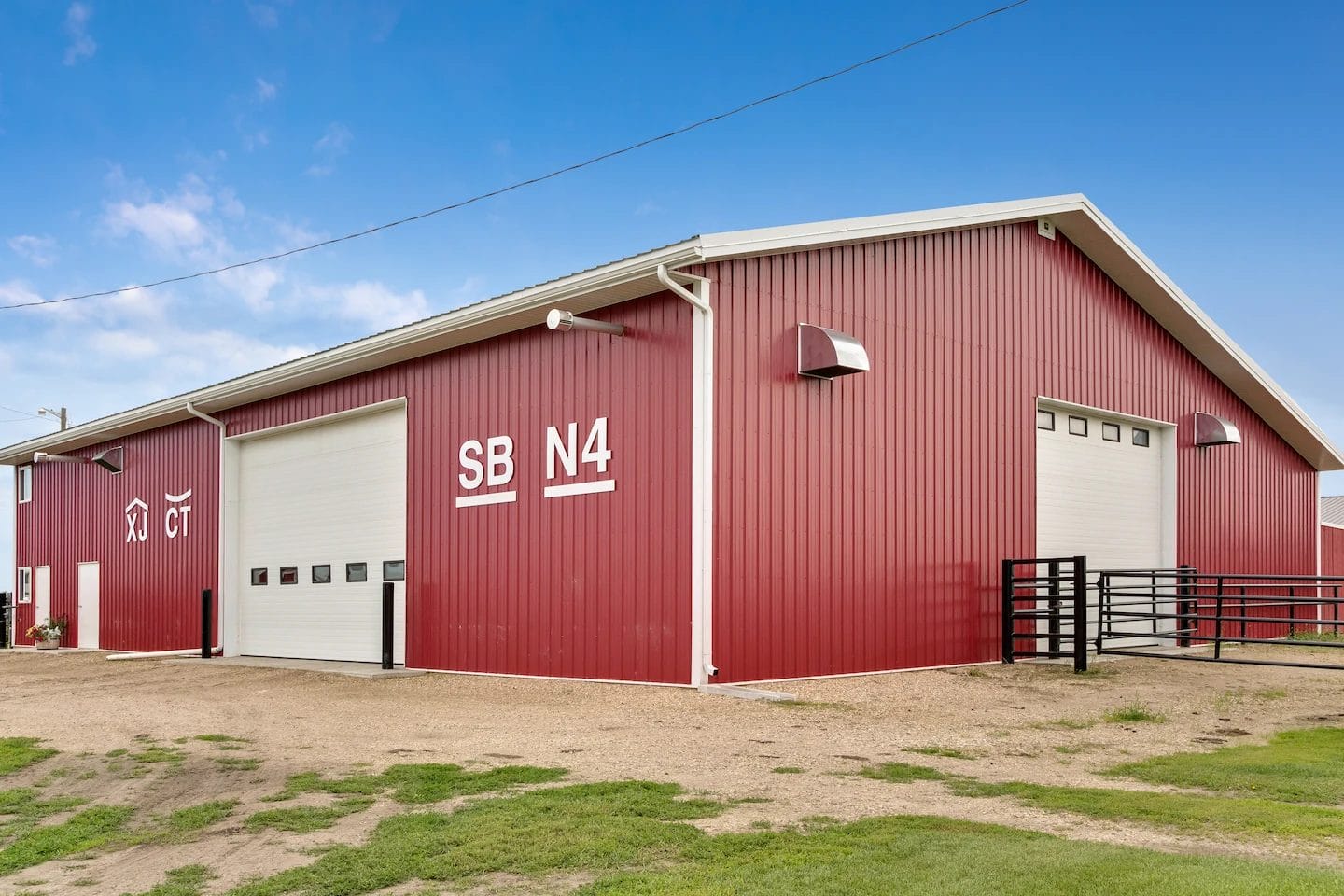
Barns with integrated living quarters, like this 50′ x 80′ calving barn, make calving season more manageable.
Late-night and early-morning checks become easier with a purpose-built space to rest while staying close to calves when it matters most.
Sheep Barn Design: What Matters Most?
Flexible Penning For Changing Needs
Sheep barn layouts often require frequent regrouping for efficient flock management. Changes based on age, lambing stage, health, or quarantine needs call for flexible penning systems that can adapt without major structural changes.
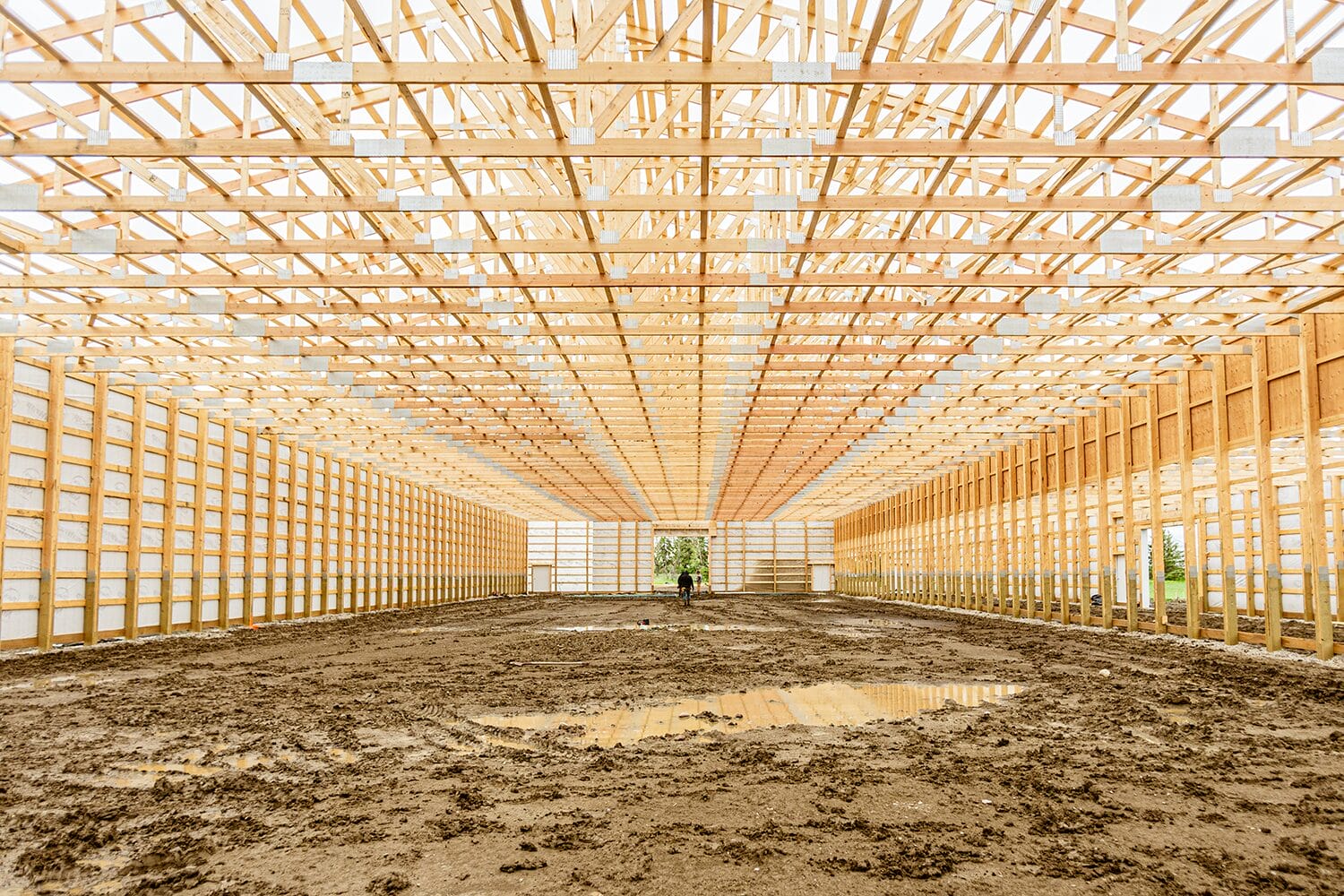
Open, clear-span interiors make it easier to reconfigure space as needed.
Controlled Airflow That Limits Drafts
While sheep tolerate cooler environments well, newborn lambs are highly sensitive to drafts. Exposure to cold air and drafts can quickly lead to chilling—a major risk factor during lambing season.
Well-sealed, insulated structures with controlled airflow are especially important in lambing areas, where consistent, protected conditions matter most.
Poultry Barn Design: What Matters Most?
High-Capacity Ventilation Systems
Poultry barns operate at high stocking densities, which makes air quality one of the most important design considerations in poultry barn planning. Heat, dust, moisture, and ammonia have to be removed quickly and consistently, so ventilation systems designed for high rates of air exchange are essential to maintaining stable interior conditions.
Lighting That Supports Growth & Health
In chicken barns, lighting plays a direct role in growth, health, and production, so lighting systems need to be intentionally planned and flexible. Demand shifts over a flock’s cycle—high-intensity light helps chicks find feed while lower-intensity light later reduces activity and improves feed conversion. Lighting also needs to be consistent and uniform to prevent birds from overcrowding in certain areas.
Features for Cleanability & Biosecurity
Easily cleaned materials and layouts are a priority in poultry barns because of strict biosecurity demands. Poultry operations are highly susceptible to disease, and a biosecurity failure can mean total flock loss and major financial damage. The high density, fast turnover, and vulnerability of flocks make a barn that can be cleaned and maintained quickly critical to success.
Ammonia-Resistant Wall Cladding
High ammonia levels change how you should approach interior wall coverings. Standard galvalume panels resist everyday rust and corrosion well, but they hold up poorly against ammonia gas and can degrade faster inside a poultry barn. Galvanized steel resists ammonia considerably better, and non-metallic PVC panels stand up to it best of all.
In a high-density operation, matching the wall finish to the ammonia load protects both the building and your long-term maintenance budget.
Pig Barn Design: What Matters Most?
Precise Ventilation Systems
Pigs are notably sensitive to heat stress, which reduces feed intake and growth rates. Beyond removing humidity, harmful gases, and dust from the interior, exhaust fans and other ventilation systems regulate temperature through both summer and winter.
Evaporative Cooling Systems
Pig barns often add misting or sprinkler systems to bring down high temperatures, cool the animals, and prevent heat stress.
High Quality Insulation
Because pigs are sensitive to temperature swings, high R-value insulation in the walls and roof helps hold consistent conditions year-round — preventing both freezing and overheating.
Choosing The Right Wall Finish
Like poultry, pigs generate more ammonia than most animals—but they’re also determined chewers, which adds a second factor to the wall-finish decision. Galvalume is the most vulnerable to ammonia gas, while both galvanized steel and PVC resist it far better. The catch: pigs can chew through and damage PVC panels, so galvanized steel is often the best all-round choice for a pig barn—resisting ammonia while standing up to the wear pigs put on interior surfaces.
Why Post Frame Construction is Popular for Livestock Barns
Post frame construction is widely used in livestock barns thanks to its strength, flexibility, and efficiency. It combines lasting durability, cost-efficiency, and flexible design tailored to your operations’ nuances to create long-term value. For rural construction, post frame is incredibly well-suited to stand strong in exposed environments and provide decades of functional use, supporting your farm day after day.
The open interior layouts created by post frame construction allow buildings to be adapted to different herds and flocks, from cattle and pig barns to poultry and sheep facilities.
Remuda Building designs and builds post frame livestock barns for cattle, sheep, poultry, and pig farms across Alberta, British Columbia, and Saskatchewan. You can explore recent projects in our building portfolio.