KEY TAKEAWAYS
- A heated farm shop building gives Canadian farmers more control over maintenance and repairs throughout the year.
- The most successful farm shops are planned around daily workflows, fleet size, and a building envelope designed to hold heat efficiently.
- Details like wash bays, attached cold storage, farm offices, and insulated doors all have major impact on long-term value.
- Post frame construction is a natural fit for building heated farm shops across Canada.
- When designed well, an insulated/heated farm shop becomes one of the most versatile, valuable buildings on your farm.
A heated, insulated farm shop is more than a storage building or a place to work; it plays a key role in keeping your operation’s schedule moving when weather would otherwise slow you down—and farm shop builders understand that importance. It’s a place to perform critical maintenance in the dead of winter or complete critical repairs during the farm season, making spring startup smoother and protecting your planting and harvest from untimely downtime. The right heated farm shop planning decisions will make sure your building adds long-term value for your farm. This guide walks you through the most important considerations prior to construction to ensure your building is built to stand strong in Canadian conditions and create daily efficiencies for your operation.
“The right heated farm shop planning process ensures you get a durable building that adds value to your everyday farm work and provides strong ROI.”
Why a Heated Farm Shop Matters for Canadian Farmers
Heated farm shops play a critical role in how efficiently your operation runs throughout the year. In Canadian conditions, where weather often shifts quickly and unpredictably, having a controlled indoor space allows you to continue working through extreme cold, wind, and storms that would otherwise halt productivity.
Without a heated building, routine maintenance and repairs are often delayed or rushed, increasing the likelihood of equipment downtime during critical windows like seeding or harvest, creating inefficiencies that can be costly. A properly planned farm shop changes that dynamic. It gives you the ability to stay ahead of maintenance, respond quickly to breakdowns, and ends the frustration of fighting against the weather.
Important Layout & Sizing Considerations for Farm Shops
The layout and size of your building will ultimately determine how well it supports your daily work. While square footage is important, the real value comes from how the space is organized. Planning should begin with a clear understanding of your equipment and workflows to ensure the building remains easy to work in day after day.
Equipment Wash Bays
Incorporating a wash bay into your building, like this 110′ x 120′ farm shop, adds a level of functionality that helps you keep proper care of your equipment with regular washes or make repairs and maintenance tasks easier with a pre-work rinse.
This space needs to be planned carefully to manage water effectively. Floor slope, drainage, and ventilation all need to work together to prevent moisture from impacting the rest of the building. When done properly, a wash bay becomes a seamless part of your workflow rather than a separate or inconvenient task.
Farm Offices
An office within your farm shop creates a practical connection between planning and execution. It provides a dedicated space for administrative work, record-keeping, and business operations without being disconnected from the daily activities of your farm.
To function properly, the office should be designed as a completely separate environment within the building—upstairs on a second floor often works best. This means proper insulation, temperature control, and protection from dust and noise. When integrated well, it becomes a space that feels intentional and improves both organization and efficiency.
Attached Equipment Cold Storage
Including an attached cold storage building with direct access to the heated shop allows expanded functionality and convenience without increasing heating demands. Not all equipment, tools, or parts require a heated environment, and separating storage from workshop is a smart decision that allows your farm to benefit from agricultural storage solutions and heated workspace under the same roof while keeping operational costs in check.
For the best results when connecting cold storage and shop space, ensure separating walls and doors are properly insulated and sealed to prevent heat loss.
Sizing Door Clearances & Building Footprint for Your Operation
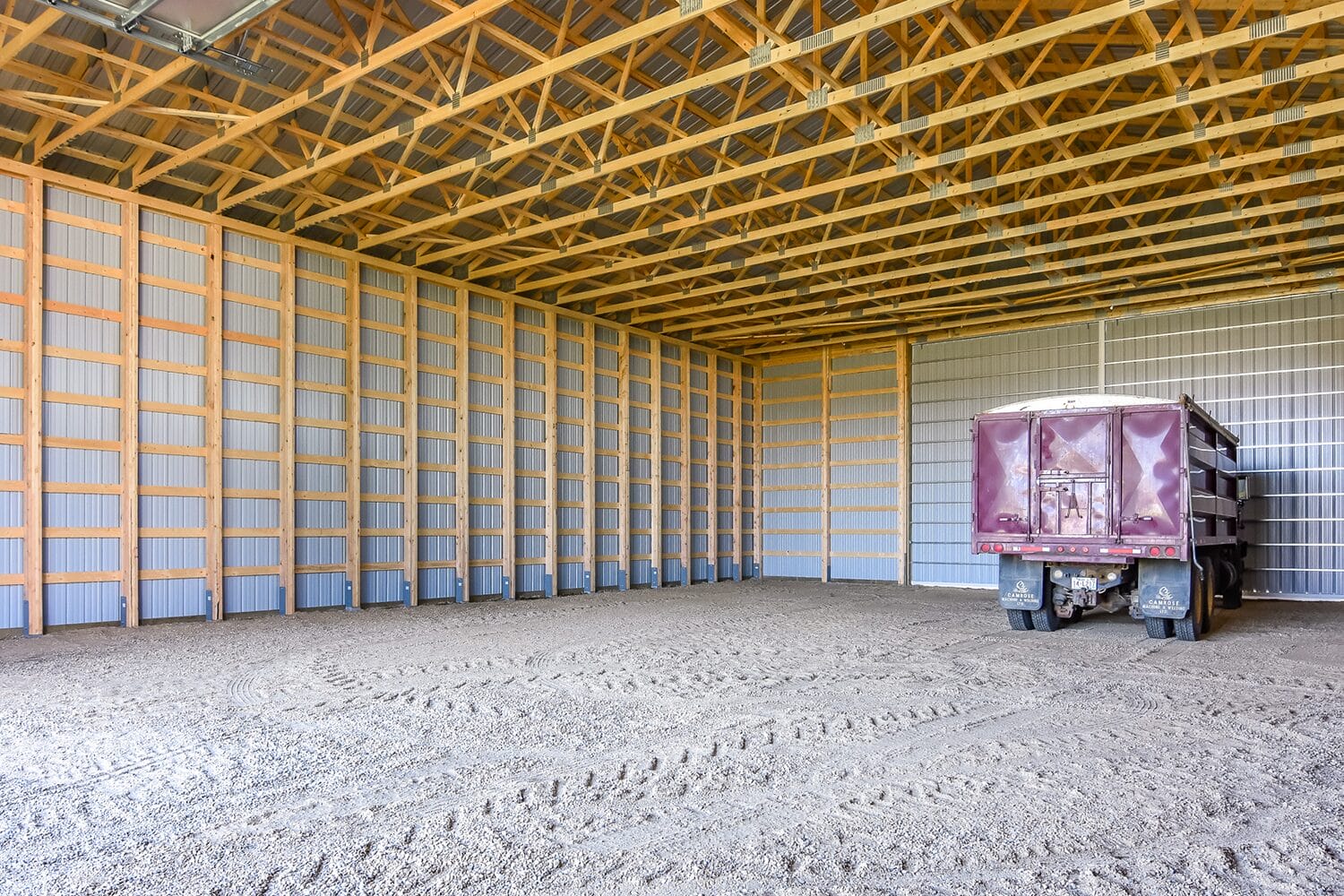
Door sizes and overall building footprint are driven by the largest equipment you plan to work on in the shop. Building height, width, and length should be tailored to the size of your fleet, and doors must provide enough clearance for your tallest and widest pieces of equipment.
From there, add additional allowances for future equipment upgrades, a growing fleet, plus any additional spaces you plan to include, such as washrooms, wash bays, and offices.
Material Selection Tips for an Efficient Envelope
The performance of a heated farm shop depends heavily on how well the building envelope is designed and constructed. While heating systems often receive the most attention, the ability of the structure to retain heat is what ultimately determines comfort and efficiency. Material selection and construction details must work together to minimize heat loss, control air movement, and manage moisture. When these elements are aligned, the building becomes easier to heat, more comfortable to work in, and more durable over time.
- Wall & Ceiling Insulation: Proper insulation throughout the walls and ceiling is essential for maintaining stable interior temperatures.
- Vapour Barriers & Air Sealing: Air movement is a primary contributor to heat loss in any building, and even well insulated structures will struggle to perform if it’s not properly sealed.
- Insulated Equipment Doors: Doors are a vulnerable area for heat loss, so choose insulated options where available.
- Bi-Fold Doors: Unlike traditional overhead doors that are installed on the interior, a bi-fold door is externally mounted. When prevailing winds blow against a bi-fold door, the seal actually improves, rather than opening gaps for drafts to enter, making them a smart option for exposed farm buildings.
“A well-sealed building envelope supports more comfortable days, lower heating costs, and creates a foundation for a long-lasting shop building.”
Concrete Slab & Floor Drainage Considerations
The concrete floor is one of the most important structural elements of your farm shop. It must be designed to handle heavy loads and integrate with heating or drainage systems. If this part of the building is not planned correctly, it can create issues that are expensive and disruptive to fix later.
Slab Thickness
Slab thickness is determined based on the weight of machinery and the daily loads it must support. An agricultural building that will regularly house large equipment needs a floor designed for heavy-duty use day in and day out.
The exact thickness and reinforcement should match the intended use of the building, ensuring it lasts as long as the building itself.
Drainage Options
Drainage is especially important in a building where snow, mud, and water are routinely tracked inside from large farm equipment. Without a proper plan, moisture and dirt can collect in work areas, making the interior more difficult to keep clean and organized.
Drainage options such as trench or pit drains set directly in your building slab make for easier clean-up after a long day’s work.
Insulation & Heating
If the shop will use radiant in-floor heat, insulation beneath the slab becomes essential. Without it, heat can be lost into the ground rather than moving upward into the building where it is needed.
This part of the design should be approached as a system. Floor insulation, slab design, and heating layout all need to work together to create even, efficient performance. When done well, radiant heat is one of the most comfortable and effective ways to heat a farm shop.
Aprons
Exterior aprons are often overlooked during heated farm shop planning, but they add meaningful value to the building. A properly designed apron creates a durable transition area outside the building, helping keep mud, snow, and debris from being dragged directly inside.
Aprons also improve equipment access, reducing wear at entry points. In a climate where freeze-thaw cycles and muddy conditions are common, exterior concrete can make a noticeable difference in daily function.
Common Mistakes During Heated Farm Shop Planning
Some of the most frustrating issues after building completion begin with planning shortcuts. A building may still look good from the outside, but if key decisions were made too quickly or without weighing cost vs. value, those shortcomings tend to show up quickly in day-to-day use.
Underestimating Current & Future Size Requirements
One of the most common mistakes is building only for current needs without leaving enough room for future equipment, added functions, or a growing operation. What feels adequate today can quickly feel restrictive.
Although expanding a post frame building is cost-effective compared to other construction methods, a heated farm shop should be planned to fit both today’s and future needs.
Overlooking the Impacts of Insulation
Another common mistake is underestimating the impact insulation has on comfort, heating cost, and overall performance. A shop with insufficient insulation or poor air sealing may still be heated, but it will be more expensive to operate and less comfortable to work in.
This often leads to frustration because the problem is not always obvious at first. The building may technically be heated, but if heat is escaping too easily, the space never performs the way it should. Prioritizing envelope performance from the beginning creates a much better outcome.
Why Post Frame Construction is a Natural Fit for Insulated Farm Shops
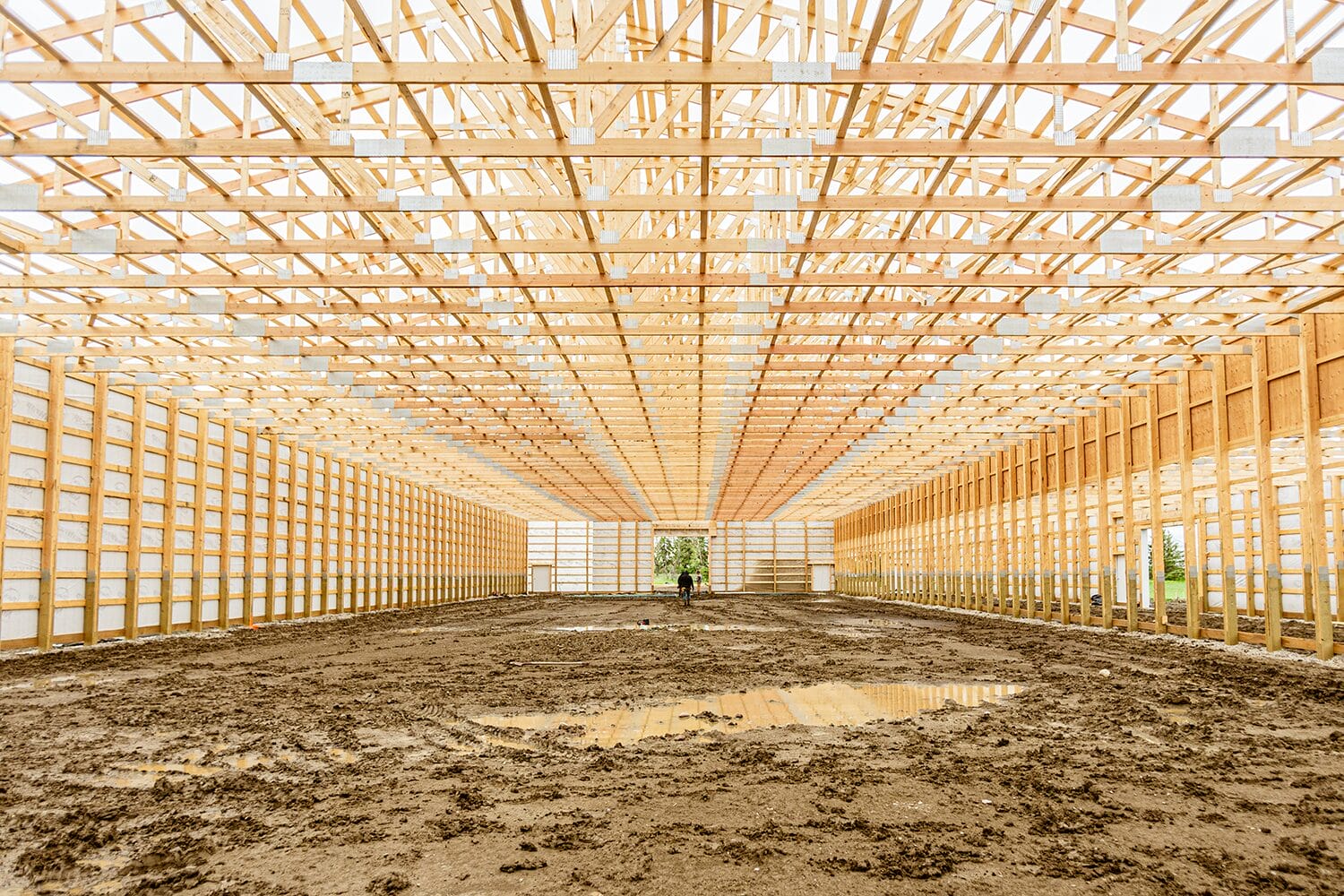
Post frame construction is a natural fit for heated farm shops because it combines structural efficiency with practical performance and flexibility. One of post frame’s biggest advantages is the ability to create large clear spans without sacrificing strength or durability.
It also performs well from an efficiency standpoint. Compared to steel-frame farm buildings, post frame construction uses wooden members, with lower heat conductivity than steel to reduce heat loss, making it easier to create a more effective insulated envelope. That matters in a heated shop where comfort and operating cost are directly tied to how well the building holds heat.
Post frame also offers flexibility. Whether you want to include a wash bay, office, mezzanine, attached cold storage building, or oversized equipment access, the system adapts well to the needs of modern farms. That combination of durability, openness, and efficiency is exactly why it continues to be such a practical solution for heated farm shops across Canada.
Remuda Building designs and builds insulated, heated post frame farm shops for operations across Alberta, British Columbia, and Saskatchewan that are engineered for strength. To view our recent work, visit our building portfolio.