KEY TAKEAWAYS
- Multi-generational rural living succeeds when home design balances private retreats with shared spaces that support daily routines and long-term comfort.
- Custom post frame construction allows one home to adapt to multiple lifestyles, accessibility needs, and future family changes without structural limitations.
- Barndominium homes offer flexible layouts, clear-span interiors, and durability that suit extended families living on acreages or farmland.
- Planning for growth from the start helps families avoid overcrowding, renovation stress, and difficult housing transitions later in life.
- Thoughtful design rooted in empathy turns emotional concerns about privacy, independence, and harmony into practical, livable solutions.
A rural homestead can be more than a place to live—it can be a legacy that brings grandparents, parents, and children together under one roof. Across Canada, barndominium and shop home builders are helping families embrace multi-generational living by finding the right home design where they can enjoy the best of both worlds: cherished family togetherness and personal independence. With the flexibility of post frame construction, it’s entirely possible to build a single countryside home that comfortably accommodates multiple generations. The key is thoughtful design that balances private retreats with welcoming communal spaces. In the sections below, let’s explore how rural multi-generational homes are evolving and how custom designs make “together under one roof” a reality.
“A rural homestead can be more than a place to live—it can be a legacy that brings grandparents, parents, and children together under one roof.”
Independence & Togetherness Under One Roof
In Canada, multi-generational living is on the rise—in 2021 there were nearly half a million multi-generational households nationally, a 21.2% jump since 2011. This trend underlines a simple truth: many families want to live together, but they need the right environment to do it happily. By blending communal and private spaces in a single dwelling, rural home designers are proving that independence and togetherness aren’t opposite ideals, but complementary ingredients of a harmonious multi-generational home.
Designing a home for multiple generations starts with a simple question: how do you let family members live together without sacrificing anyone’s independence? The answer lies in balancing independence and togetherness under one roof. A well-designed multi-generational home provides spaces where the whole family can gather—like a big country kitchen for shared meals or a great room for holidays—while also ensuring each generation has a private haven to retreat to. For example, grandparents might have a quiet suite with their own sitting area, while young children have a playroom separate from the main living room. By zoning the home into shared and private areas, families can bond when they choose and enjoy privacy when they need.
This balance is essential because, while living together offers many rewards, it also brings challenges if the house isn’t suited to an extended family. Close-knit rural families often look forward to impromptu porch conversations and grandparents reading bedtime stories to the kids. Yet without private bedrooms, bathrooms, or a secondary living nook, even the most loving family can feel the strain of being “always together.” Studies show that inadequate private space can increase tension in multi-generational households. A custom design prevents this by giving each generation their own territory—whether it’s a snug den, an upstairs loft, or a main-floor bedroom wing with a door to close. Everyone benefits.
Crucially, a home built for togetherness and independence also anticipates future needs. Families grow and change, so design decisions today should make space for tomorrow. That might mean framing an extra bathroom or multipurpose room that can be finished later, or choosing an open-plan layout that can be easily reconfigured as the family’s dynamics evolve.
Redefining the Rural Family Home for Every Generation
In decades past, a “family home” might have meant parents and kids, with grandparents living in a smaller cottage next door or in town. Today, rural family homes are being redefined for every generation by bringing all ages back together under one custom-designed roof. Think of early dwellings where three generations lived on the homestead, but updated with modern comforts and design. Economic and social shifts are driving this change. With rising housing costs and a strong desire for families to stay connected, rural Canadians are increasingly open to multi-generational setups. In fact, a recent national survey found that 96% of seniors (65+) said they would do everything possible to avoid moving into a care facility. For many, aging in place means aging in a family home. Rather than grandparents relocating to senior housing in town, they’re moving in with family, or vice versa, and the “family home” now includes Nana and Papa in the floor plan.
This evolution requires a fresh approach to home design. A cookie-cutter subdivision house won’t meet the unique needs of an extended rural family. Every generation has its own lifestyle and requirements, so the home must be tailored accordingly. For instance, an elderly parent may need a main-floor bedroom with an accessible ensuite bathroom, wide doorways for mobility aids, and maybe a private sitting porch to enjoy morning coffee. Meanwhile, young adults in the family might appreciate a self-contained suite or a loft area where they can have friends over without disturbing the whole house. Designing for every generation means thinking about accessibility, privacy, and convenience all at once. It’s not just about adding extra bedrooms; it’s about creating a livable arrangement for all. That could include features like two laundry rooms (so grandma isn’t hauling clothes upstairs), a second small kitchen or kitchenette for independent meal prep, and a flex room that can serve as a home office or an extra bedroom as needs change.
Another aspect of redefinition is blending modern amenities with rural living preferences. Rural families often have lifestyles that city designs don’t account for—like mudrooms for boots and jackets, large pantry storage for bulk supplies, or hobby spaces for recreation, woodworking, or tinkering on cars. In a multi-generational home, these practical spaces become even more important. A well-planned mudroom with plenty of storage and perhaps a second fridge can serve all generations. A home workshop or craft room allows different age groups to pursue projects, whether it’s Grandpa’s woodworking or the kids’ science experiments, without cluttering shared living areas. By recognizing these needs, architects and builders are redefining what a family home can be: not just a generic house, but a personalized homestead.
Most importantly, the process is collaborative. It’s about empathy and expertise coming together. Home designers sit down with families to discuss daily routines, future plans, and even cultural traditions that might influence the layout. For one family, that might mean a large open-concept dining area to host Sunday dinners. For another, it could mean soundproofing between floors so that shift-working parents and their infant can sleep while the rest of the family watches a movie. In rural communities, family ties are strong, and homes are often passed down through generations—indeed, as of the 2016 Census, 97% of Canada’s farms were owned by families. This sense of continuity guides the design approach. Don’t just build a house; craft a multi-generational family hub that honours the past (the idea of family together on the land) while adapting to the present and future. The rural family home is no longer one-size-fits-all. It’s as unique as the family who lives there, designed to ensure every generation feels at home.
Barndominium & Shop Homes Built for Generations
One of the most exciting trends in rural multi-generational living is the rise of barndominiums and shop homes (or shouses) built for generations. To answer the question, what is a barndominium: it’s exactly what it sounds like—a cross between a ‘barn’ or larger utilitarian shop and a condominium (or house). Picture a big, beautiful structure on a piece of acreage, but inside it’s a modern, comfortable home with a dedicated storage or work area. Barndominiums often use post frame construction (the kind used for pole barns) and can feature open layouts, high ceilings, and expansive footprints. For multi-generational families, barndominiums offer a goldmine of possibilities. Their spacious, open interiors mean you can create multiple living sections under one enormous roof. It’s not uncommon for a barndominium to include a primary residence plus a smaller self-contained suite, all in one building. For example, the ground floor might hold a large four-bedroom main home for a young family, while a side wing or loft houses a two-bedroom in-law suite for grandparents, complete with its own kitchenette and entrance. Everyone is technically under the same roof, but the design naturally delineates each household’s space.
Why are barndominiums so well-suited to multi-generational living? First, space. Rural properties usually have ample land, so you’re not constrained by a narrow city lot. A post frame shop home’s structural system uses sturdy posts to carry loads, which frees up the interior from load-bearing walls. In practice, this means you have the flexibility to design the floor plan you want. Need a vast great room where the whole family—cousins and all—can celebrate holidays? Done. Want to partition off a quiet suite for the elders? Easy.
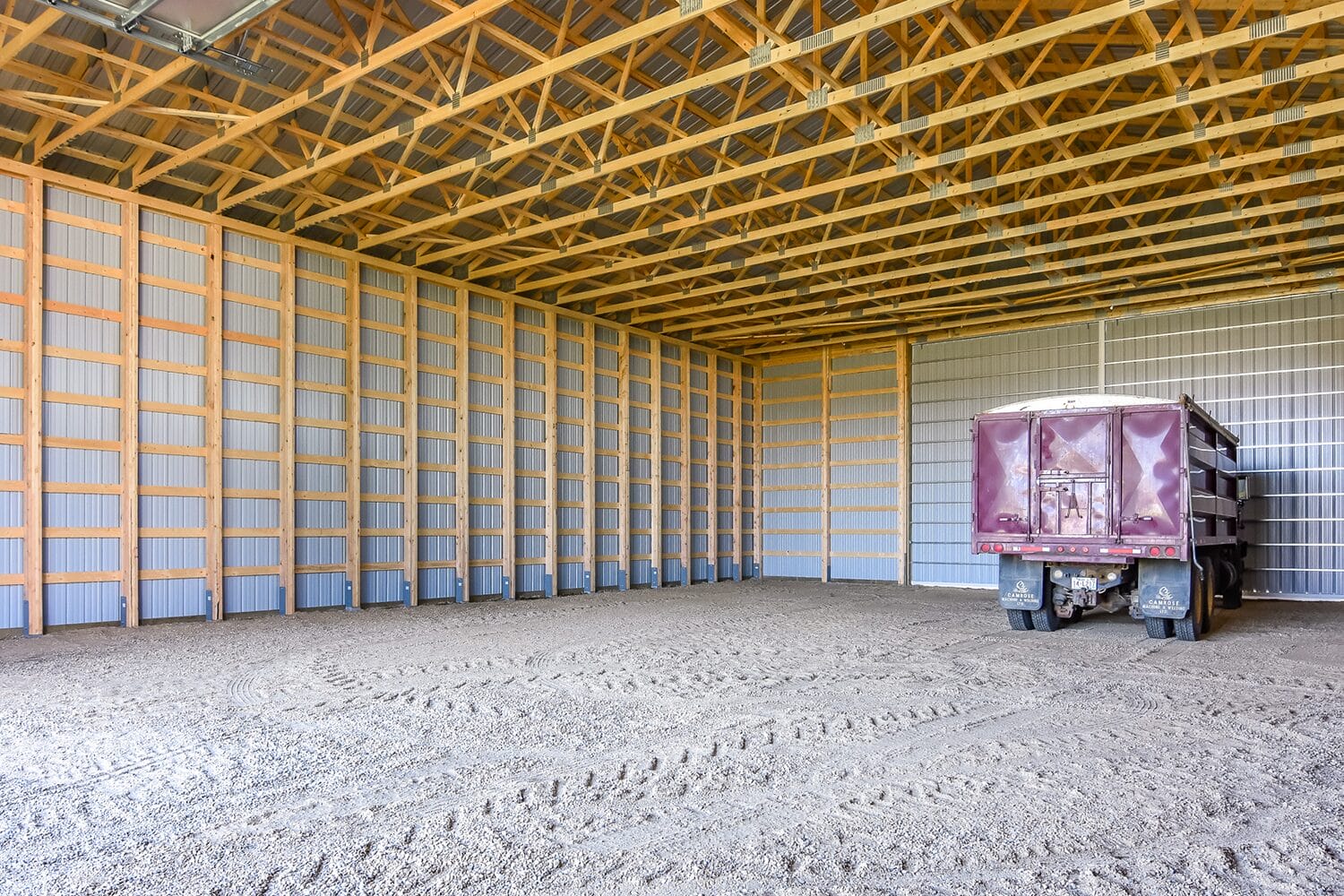
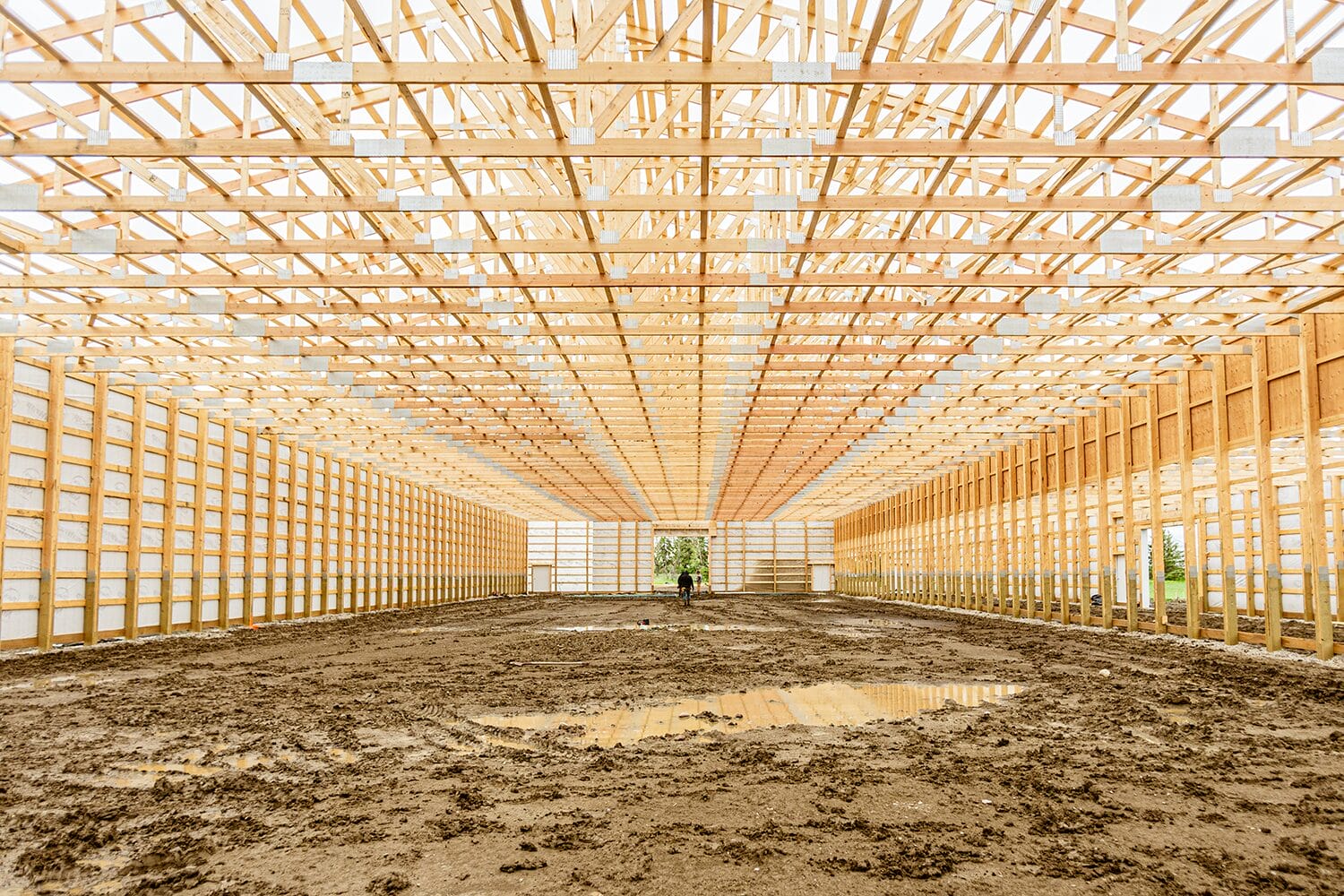
The clear-span interior of a post frame building allows for creative layouts that traditional homes might struggle with. Think of it like a blank canvas: you can include multiple bedrooms, sitting rooms, and even features like a large indoor workshop or a hobby garage, all contiguous yet configurable into separate spaces. A barndominium’s generous dimensions also make it simpler to meet everyone’s storage needs (from seasonal decor to RVs to kids’ toys) without crowding the living spaces.
Secondly, functionality. Many rural families love barndominiums because they often incorporate work and life under one roof. For a multi-generational household, this could mean integrating a shared workshop or large garage attached to the living quarters. Grandpa can tinker in the attached shop while the kids play in the rec room and someone else cooks dinner next door–all without stepping outside in winter. This “all-in-one” design is both practical and deeply rooted in tradition. The result is a building that literally houses the family’s living space and livelihood in one structure. And because barndominiums are built with durable materials (often metal roofing and siding over a wood frame), they stand up to the elements and the test of time.
Another advantage is aesthetics and lifestyle. Barndominiums often boast rustic charm—gable roofs, big doors, and even layouts with vast wrap-around porches—that appeals to families who cherish country living. Yet inside, they can be finished as luxuriously as any custom home: hardwood floors, gourmet kitchens, cozy fireplaces. This blend of rustic and modern creates a welcoming atmosphere for all ages. Children love the novelty of living in a “barn” house with high loft spaces, and seniors appreciate the single-level options and wide-open layouts, which enhances mobility. Moreover, barndominiums can be highly energy-efficient when well-insulated, meaning even though you have a big space, the utility costs can be manageable. Many families install efficient heating like radiant floors or wood stoves that give the home a warm, communal feeling on cold evenings. In short, barndominiums encapsulate what multi-generational rural living is about: room to live and grow together. They take the best of rural architecture (space, durability, simplicity) and fuse it with thoughtful home design.
“Designing for growth means building in flexibility from day one.”
Multi-Generational Living Finds a Home in Post Frame Design
Multi-generational living in rural Canada is more than a trend—it’s a return to core values of family, community, and self-sufficiency. And it finds a natural home in post frame design, which offers the flexibility, durability, and customization needed to meet unique needs. Post frame construction is now at the heart of some of the most innovative rural home designs. Post frame construction’s inherent strengths—wide-open interiors, structural efficiency, and layout flexibility—make it ideal for creating large, versatile living spaces without compromising on comfort or style, like this two-story barndominium. Under a spacious post frame roof, a family can craft exactly the environment they want: a wing for the older generation, lively shared gathering areas, quiet nooks for study or relaxation, and even integrated work or storage spaces. The result is a single dwelling where everyone has a sense of place. This building approach uses tried-and-true methods to solve modern living challenges.
Remuda Building builds barndominium and shop home shells to lock-up stage for rural families in Alberta. Visit our project portfolio to see some of our most recent builds.