KEY TAKEAWAYS
- Your building location should reflect your daily routines so storage, parking, and movement stay efficient year-round.
- Straight, firm access routes from the road to equipment doors protect vehicles, reduce delays, and simplify winter use.
- Drainage and soil conditions deserve early attention because water and frost will test the site every year.
- Locating your building closer to utility lines and on land that is less hilly or densely forested can help you save on project costs.
- Canada zoning rules and permit requirements must be confirmed early to avoid site changes after planning is underway.
When planning your post frame build, most location decisions feel small on paper. But treating them as afterthoughts shows up later as daily frustrations like tight turns and storage that never stays organized. Picking the right spot on an acreage or farm means thinking about what you need on your busiest days. A little planning up front makes post frame building site planning simpler, smoother, and far more satisfying once the doors start opening every day.
Land, access, and local rules all shape what your building can do for you. You also want a location that protects your investment from water, drifting snow, and constant wear. Good location selection shapes the benefits you feel daily in a smoother routine, but also influences the overall project cost by determining site prep needs and utility tie-in complexity. While it might seem like there is a lot that goes into this decision, a walk of your property with a post frame builder can quickly identify the best place to build. The goal is a building that feels intentional every time you pull up, unload, or put tools away at the end of the day.
“Your post frame building will either save you hours every week, or it will quietly steal those hours for decades.”
Matching Building Location to Storage Needs, Workflows & Daily Use
A post frame building earns its keep when it fits your routine naturally. Storage workflows look different for a farmer parking tillage equipment and combines than for an acreage owner’s hobby shop. Meanwhile, equestrian owners also need smooth movement for feed, tack, and manure handling, plus quiet spaces for horses. Start site planning by picturing your busiest weeks and placing the building where those jobs are simple. Your building will be a staple in your daily life for decades, so placing your building to optimize workflows is a smart long-term decision.
Start with the Work You Do Most Often
Think about the tasks you do every week, then notice the paths you already take across your yard. If you grab the skid steer daily, the building belongs closer to the yard entrance than the back fence. If your shop work happens at night after chores, you will appreciate a location with clean footing and a short walk from the house.
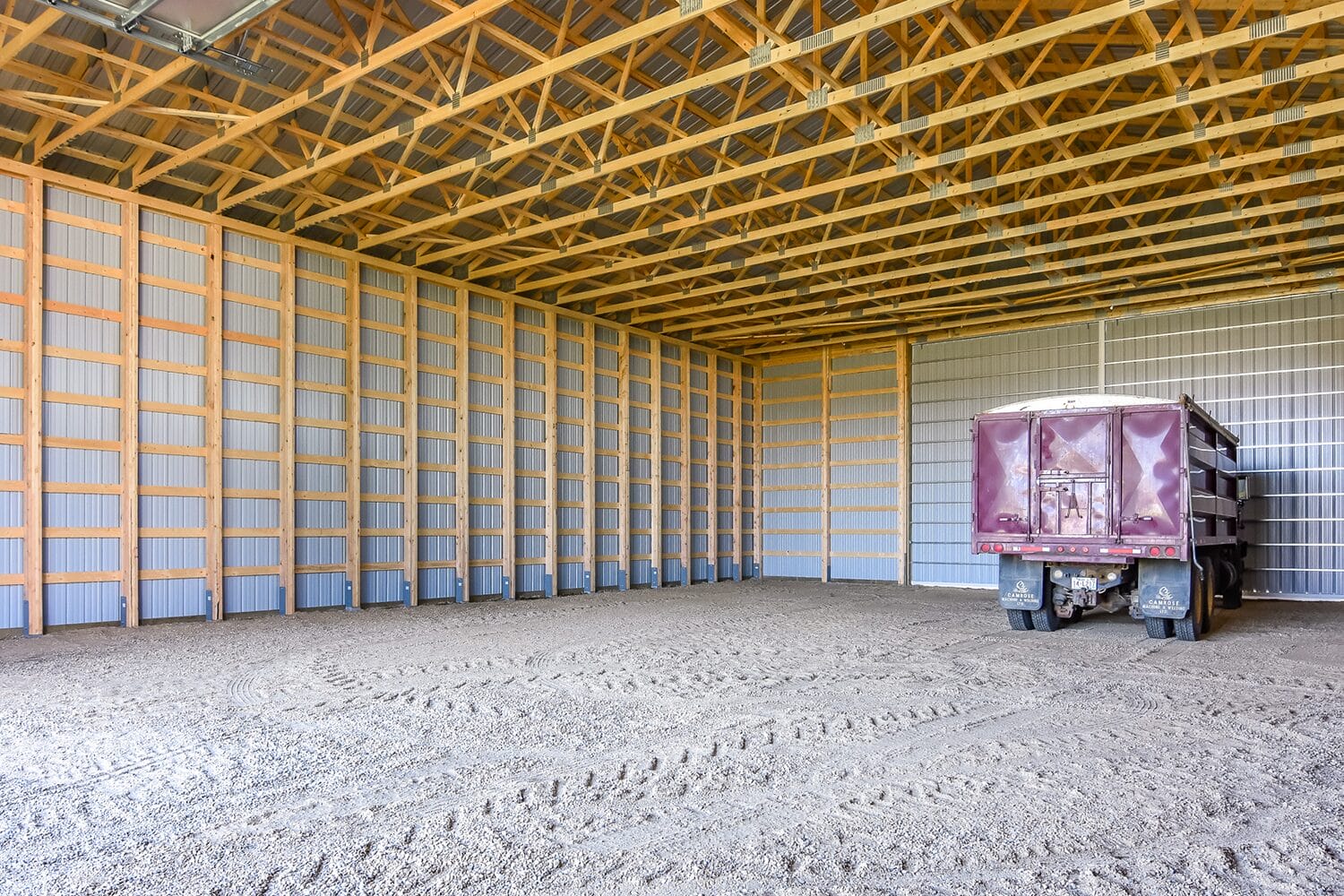
Seasonal work matters too, especially during seeding, haying, or calving. Plan a location that lets you place large equipment doors on both ends to create pull-through access for equipment to eliminate the frustrations of shuffling machinery. That same spot should keep manure piles, fuel storage, and delivery drop zones out of your main travel lane. When the busiest month hits, the right location keeps your day moving even when your schedule is tight.
Respect the Flow Between Buildings You Already Use
Look at the buildings you already rely on, because the distance between them creates either convenience or extra steps. A workshop near your main yard will keep part runs short and will cut down on carrying tools through snow. A cold storage building for farm equipment works best near your field exit, so you can park without blocking the yard. Horse stables and shelters benefit from a location that keeps feed deliveries easy while keeping horses away from traffic.
Noise and dust deserve attention, especially if you weld, grind, or run loud equipment. Place the building far enough from living areas so that late-night work does not disturb your family. The same thinking helps with horse arenas, where riders want calm, and horses settle better away from busy driveways. A thoughtful buffer also reduces conflict with neighbours and keeps your yard feeling orderly.
Plan for Deliveries, Drop Zones & Outdoor Work Pads
Large building construction attracts large deliveries, from trusses and metal cladding to gravel and concrete. Choose a spot that allows a truck and trailer to pull in, unload, and leave without backing for a long distance. Once your building is up, a clear staging area beside your equipment doors will protect them from dents and will keep materials out of the weather. Good staging space also protects your grass, because repeated traffic will quickly turn a soft area into ruts.
Outdoor work matters as much as indoor space for many rural property owners. Leave room for a gravel or concrete apron, a wash bay pad, or a spot to hook up trailers without blocking doors. If you plan to store hay bales, consider loader access and stack height before choosing a location. Space outside the building will keep the interior cleaner and make your storage feel organized instead of packed.
Use Sun, Wind & Sightlines to Make Daily Use Easier
Sun and wind affect how a building feels on a winter morning and on a hot July afternoon. A door facing hard west winds will collect snow drifts and will create more scraping and chipping around the threshold. Placing the main equipment doors where sunlight hits them will reduce ice buildup and will help you see what you are doing. Good sightlines from the house to the building add security and make it easier to notice issues like open doors or drifting snow.
Orientation also shapes how you use windows and wall lights for daylight. A heated farm shop that gets morning light will feel more comfortable when you start early, while afternoon shade can make summer work easier. Equestrian building owners often prefer arena openings that avoid direct sun glare during riding lessons. A few minutes spent watching wind patterns and sun angles will pay back every day you use the building.
Location choices that support daily movement will make any post frame building feel more useful. You will spend less time repositioning equipment, less time walking back and forth, and more time actually getting work done. Your property will also stay cleaner, because traffic stays organized and materials stay where they belong. Once the building matches your routine, the rest of your planning becomes far easier to finalize.
Evaluating Access Routes for Equipment, Vehicles & Daily Use
Access starts at the road, pastures, and field, not at the equipment door, so walk the full route a truck or combine will take to reach your building. A tight corner, steep grade, or soft shoulder will create headaches for trucks, farm equipment, and trailers. Aim for a route that stays firm during spring melt and that allows you to meet oncoming traffic without playing a backing game. Gate widths, overhead power lines, and tree branches all need attention before you commit to a building location.
Think about how you will enter and exit the building on the worst day of the year, not the best. Snow storage from plowing needs its own space so your driveway and door approaches stay open. A straight approach to equipment doors will reduce bumper damage and will make it easier to line up a trailer or tractor. Keep a safe walking path to your doors, because daily use includes carrying tools, feed bags, and winter gear.
Understanding Drainage, Soil Conditions & Long Term Ground Stability
Water will test your building site every spring, and poor drainage will show up as soft ground, standing puddles, and frost heave. Pick high ground or build up the grade so surface water flows away from the building on all sides. Downspouts and eavestroughs collect roof runoff and direct it away from the foundation, which protects the base of the posts and keeps the pad firmer. A building that stays dry at the perimeter will stay cleaner inside, because mud and grit stop tracking through your doors.
Soil type matters just as much as water flow, because clay, silt, and organic topsoil behave differently under load and frost. A simple soil report or test holes will show where firm ground starts and where you need more base prep. Good ground prep will also protect concrete slabs and floor drains from cracking or shifting, which keeps your building easier to use year after year.
Balancing Utility Access & Ground Prep Costs
One of the most significant variables in your budget will be the proximity to existing utility lines. While a secluded corner of your lot might offer the best view, building further away from electrical grids, water wells, or sewage lines drastically increases the cost of “trenching” and running these connections to the structure. Every additional foot of distance requires more materials and labour to ensure your building is fully functional, making utility access a primary consideration for cost-effective placement.
Beyond utilities, the physical topography of your chosen spot determines the intensity of the necessary site preparation. A site characterized by steep slopes, rolling hills, or dense clusters of trees will require extensive clearing and professional grading to create a stable, level pad for construction. Heavy excavation not only adds time to your project timeline but also increases expenses for heavy machinery and soil stabilization. Choosing a flatter, clearer area can minimize these initial hurdles. Selecting the best site for your building is a balance between creating smoother routines and controlling preconstruction costs.
Canada Setbacks Zoning & Permit Requirements
Local rules shape where you can build just as much as soil and workflow do. Each county, municipality, or town applies its own Land Use Bylaw and approval process. Development permits focus on location and use, while building permits focus on safety and construction standards. A quick call to planning staff early will protect your timeline and prevent redesign work later.
- Land use district & approved use: Confirm your parcel’s land use district and the allowed use for your building, because the land use bylaw sets the standards and the municipality issues the development permit.
- Development permit vs building permit: Development approval covers the location and use, while a building permit covers structural and safety aspects and includes inspections by a safety codes officer.
- Setbacks & building envelope: Check minimum distances from property lines, roads, and highways, because setback rules depend on your land use district and change across Canada.
- Size, height & site coverage limits: Many bylaws cap accessory building height and total coverage, so confirm these before finalizing your post frame building site planning.
- Small accessory building exemptions: Some municipalities exempt very small sheds from certain permits, but standards like setbacks still apply, so confirm the threshold where you live.
- Trade permits & services: Electrical, gas, plumbing, and private sewage work often require separate approvals, so plan service runs and equipment locations early.
Permits and setbacks feel tedious, but they protect you from costly changes after you commit to a location. A quick check with your municipality will clarify what your building plans need for approval. Clear paperwork also helps your builder schedule crews and materials with fewer surprises. Once the rules are clear, you can focus on the site and layout choices.
“Local rules shape where you can build just as much as soil, land restrictions, and workflow do.”
How Early Site Planning Supports Strong Post Frame Construction
Early post frame building site planning gives your designer real constraints to work with, which leads to stronger construction details. Whether you’re building a farm structure, equestrian facility, or acreage building, accurate grades, soil conditions, and access points help engineers choose the right foundation approach and structural details that match the site.
A clean plan also reduces last-minute changes that can compromise drainage, door placement, or future expansions. Good planning protects long-term performance, not just build-day efficiency. Water control features like building wrap, eavestroughs, and downspouts will work best when the building sits on a well-prepared pad with room for runoff. Clear-span interiors and flexible design let you adjust the internal plan over time, but the building still needs a stable site to stay square and tight. When your site plan is settled early, your project will feel calmer from design through the day you start using the building.
Remuda Building has designed and built custom post frame buildings for farms, acreages, and rural properties across Alberta, British Columbia, and Saskatchewan since 2014. Explore our diverse range of projects in our portfolio.