KEY TAKEAWAYS
- Start with a realistic budget. Account for the full scope of the project early so size, layout, and design decisions stay realistic.
- Plan before you design. Strong post frame home plans start with budgeting, lifestyle considerations, and site realities before drawings are finalized.
- Choose plans that work with your land. The right plan is tailored to your property’s conditions rather than forcing adjustments through added cost, site work, or design changes.
- Good planning keeps costs focused on value. Making decisions in the right order helps control post frame home costs by reducing redesigns, delays, and unnecessary upgrades.
- Trust expertise. Working with experienced builders ensures engineered accuracy, coordinated scheduling, and a post frame home built for long-term performance.
Planning a post frame home is exciting—and it’s easy to get ahead of yourself. A comfortable, welcoming post frame home starts long before construction begins. Taking the time to properly budget and plan before diving into design phase helps control post frame home cost, avoid design compromises, and keeps your project grounded in reality. The right planning sequence turns an idea into a home that supports your family’s life in the country, balancing layout, durability, and long-term value from the very start.
Post frame home plans work best when key decisions are made in the right order. How the interior space will be used, how the home sits on the land, and how structural choices respond to climate all influence the final outcome. The planning tips that follow focus on helping you think through these decisions early—so your post frame home plans stay practical, your budget stays intact, and the finished home functions as well years down the road as it does on move-in day.
Understanding How Post Frame Home Plans Work
A complete set of post frame home plans brings together detailed architectural and structural drawings that guide the entire build. These plans typically include floor plans, elevations, foundation and roof plans, along with layouts for electrical and plumbing systems. Together, they show how rooms are arranged, how spaces flow, and how building components fit together within the overall structure.
Post frame home plans come together after the overall building design has taken shape. Once you’ve decided on the building footprint, interior layout, and how the space will be used, your builder develops the plans needed to support permitting and guide construction. The result is a properly engineered, durable home that’s ready to be built—and ready to make your own.
9 Planning Tips to Get the Most from Post Frame Home Plans
Thoughtful planning is what allows post frame home plans to deliver real value. Early decisions around layout, size, and site conditions influence comfort, durability, and long-term performance. The following planning tips are designed to help you make those decisions early—so your home is easier to build, easier to live in, and built to last.
1) Start with a Realistic Budget for the Entire Project
One of the most common mistakes in early post frame home planning is focusing only on the building itself. A successful project starts with a clear, comprehensive budget that accounts for the full scope of costs—not just the structure. Establishing realistic expectations early allows you to make informed design decisions with confidence and avoid surprises later.
When planning a post frame home in Canada, your budget should consider:
- Property purchase: If you don’t already own land, securing a suitable rural property is the first step.
- Site preparation and driveway: Clearing, levelling, drainage work, and driveway construction are required before building can begin.
- Utility services: Extending power and natural gas, drilling a water well, and coordinating service connections all add to total project cost.
- Septic systems: Septic design and installation should be planned early to align with site layout and permitting.
- Permits and approvals: Development and building permits represent a relatively small cost, but they are essential to account for.
- Construction costs: Post frame home cost varies significantly based on size, layout complexity, finishes, and structural features.
Proper budgeting sets the foundation for a smooth build process and ensures your post frame home plans remain achievable from concept to completion.
2) Research Local Building & Permitting Requirements Early
Rural municipalities have their own rules governing setbacks, building height, footprint size, and land use. Understanding local permitting requirements early helps avoid delays and ensures your post frame home plans move smoothly through approvals and inspections.
Confirming requirements upfront also clarifies what documentation your builder will need to provide, such as engineered drawings, site plans, and structural details. Some rural municipalities may also impose exterior design guidelines that influence cladding, roofing, or overall appearance.
3) Plan Location & Orientation Before Finalizing Post Frame Home Plans
Your home’s placement on the property has a lasting impact on comfort, functionality, and maintenance. Reviewing site conditions early—such as drainage patterns, required dirt work, and distance to utilities—helps determine the most practical building location.
Orientation also plays a critical role. Position windows to capture views and natural light, and place doors where snow drifting is minimal to simplify winter access. Thoughtful site selection improves long-term livability and protects the investment you’re making in your home.
“Defining what matters most early prevents compromises later.”
4) Define The Must-Have Features For Your Home
Post frame homes are most successful when the design reflects how you live day to day. Start by identifying non-negotiable features that support your lifestyle.
For barndominiums or shop homes, consider how you’ll use the attached workspace, the size of vehicles or equipment being stored, and how tools and storage should be organized. If hosting and entertaining are important, prioritize open kitchen-living spaces, large windows, or outdoor decks and porches that take advantage of rural views.
Interior layout decisions directly influence the building shell. Ceiling heights, second floors, window placement, and door locations all stem from how the interior is planned.
5) Match The Building To Both Current & Future Needs
Well-designed post frame home plans balance today’s requirements with tomorrow’s possibilities. Designing only for current needs can lead to costly expansions later. Future-proofing ensures your home remains functional for decades.
Begin with the size of what must fit now, like vehicles, equipment, and your family size, then allow for realistic growth. If future plans include an RV, boat, or additional vehicles, it’s often more cost-effective to increase garage or workshop space during the initial build. The same applies to family growth: adding bedrooms or flexible living space upfront prevents disruptive additions down the road.
6) Compare Standard Post Frame Home Plans Against Custom Designs
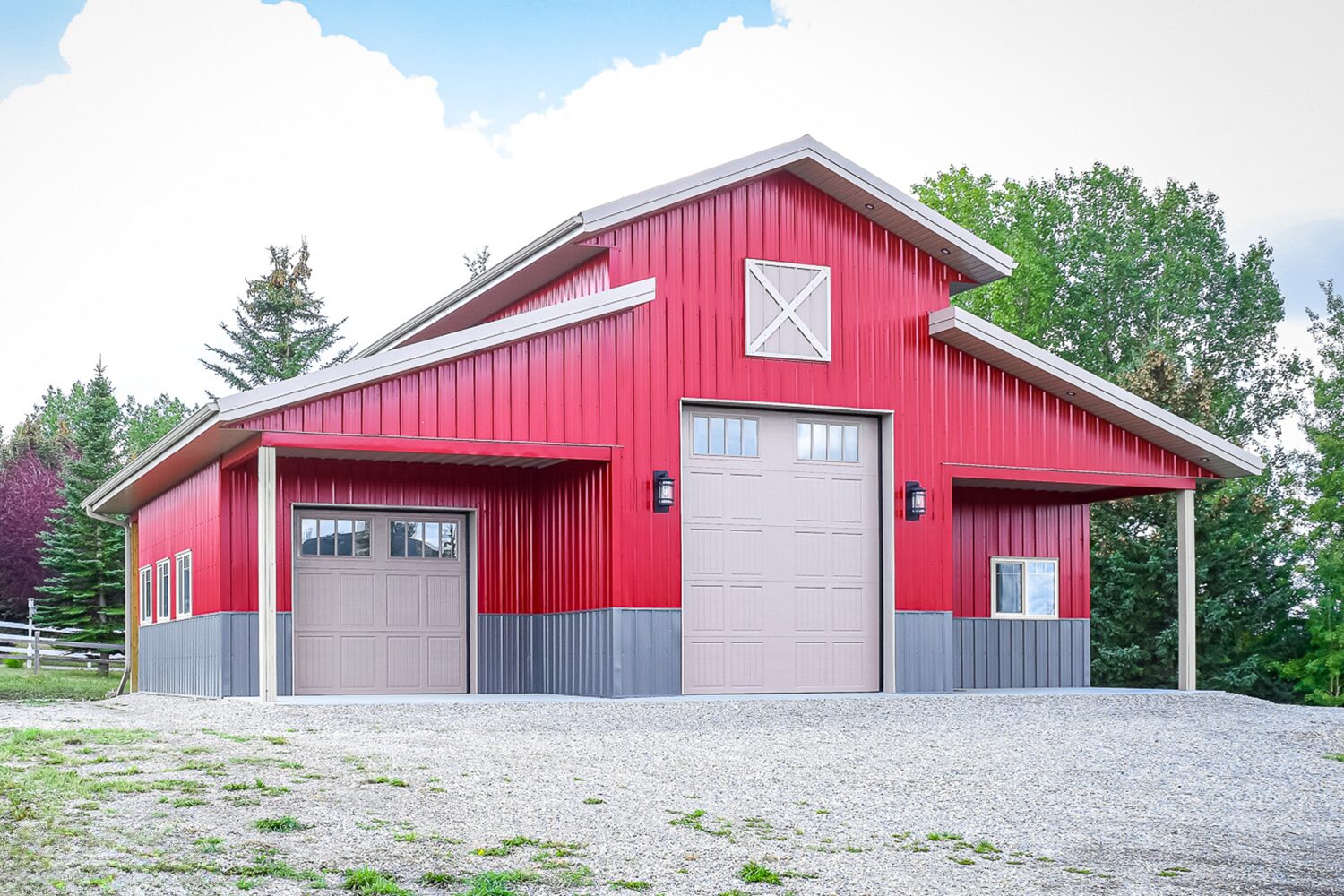
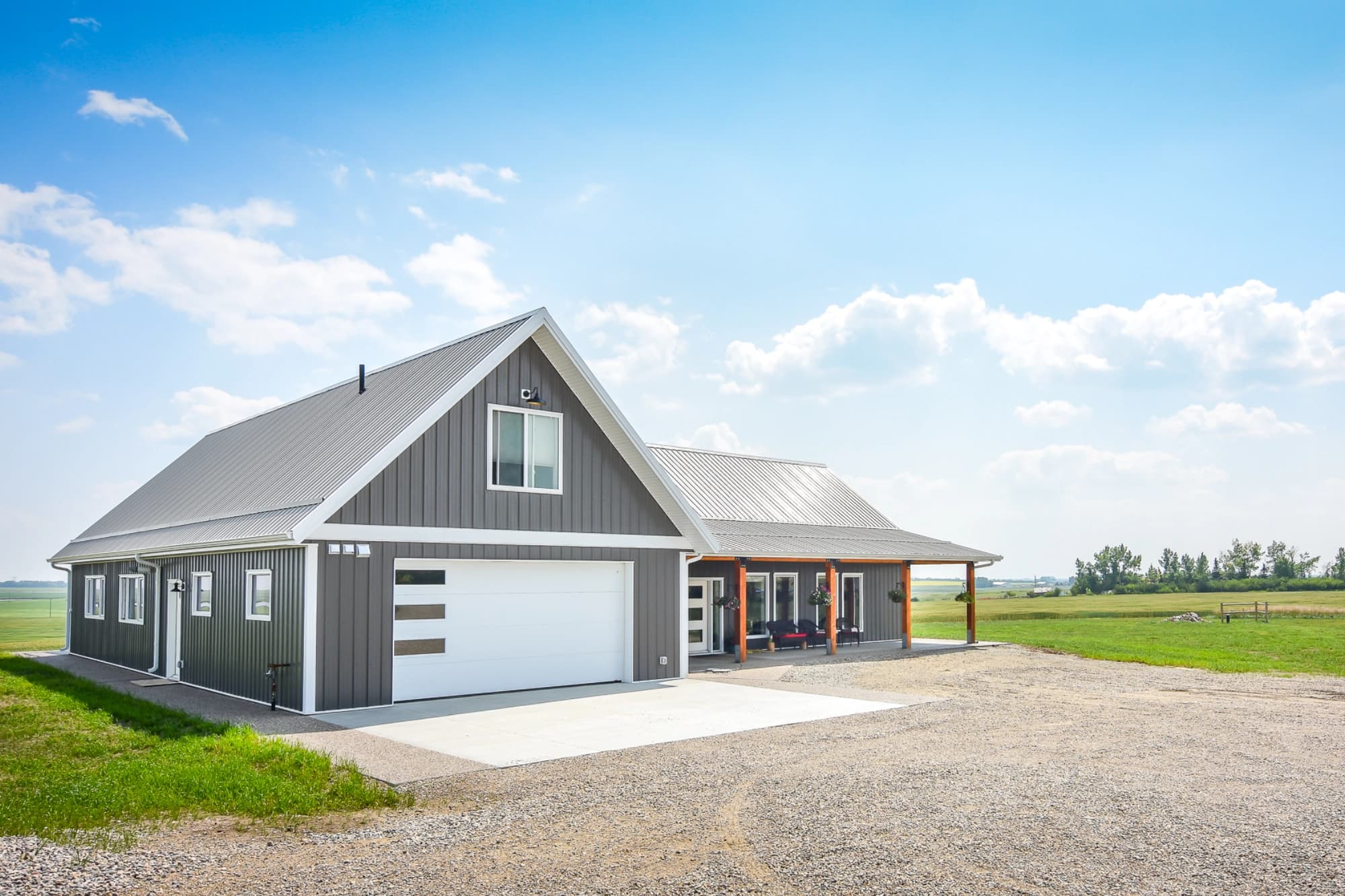
Residential post frame construction offers a wide selection of standard layouts, from country bungalows to two-storey barndominiums. Many families find that a standard post frame home plan meets their needs efficiently while keeping planning timelines and costs under control.
Standard plans often provide advantages in design efficiency and predictability compared to fully custom homes. However, custom post frame home plans remain a strong option for families with unique layout needs, aesthetic preferences, or functional requirements.
The inherent flexibility of post frame construction supports both approaches, allowing homeowners to choose the path that best fits their vision.
7) Prioritize Structural Features That Support Long-Term Durability
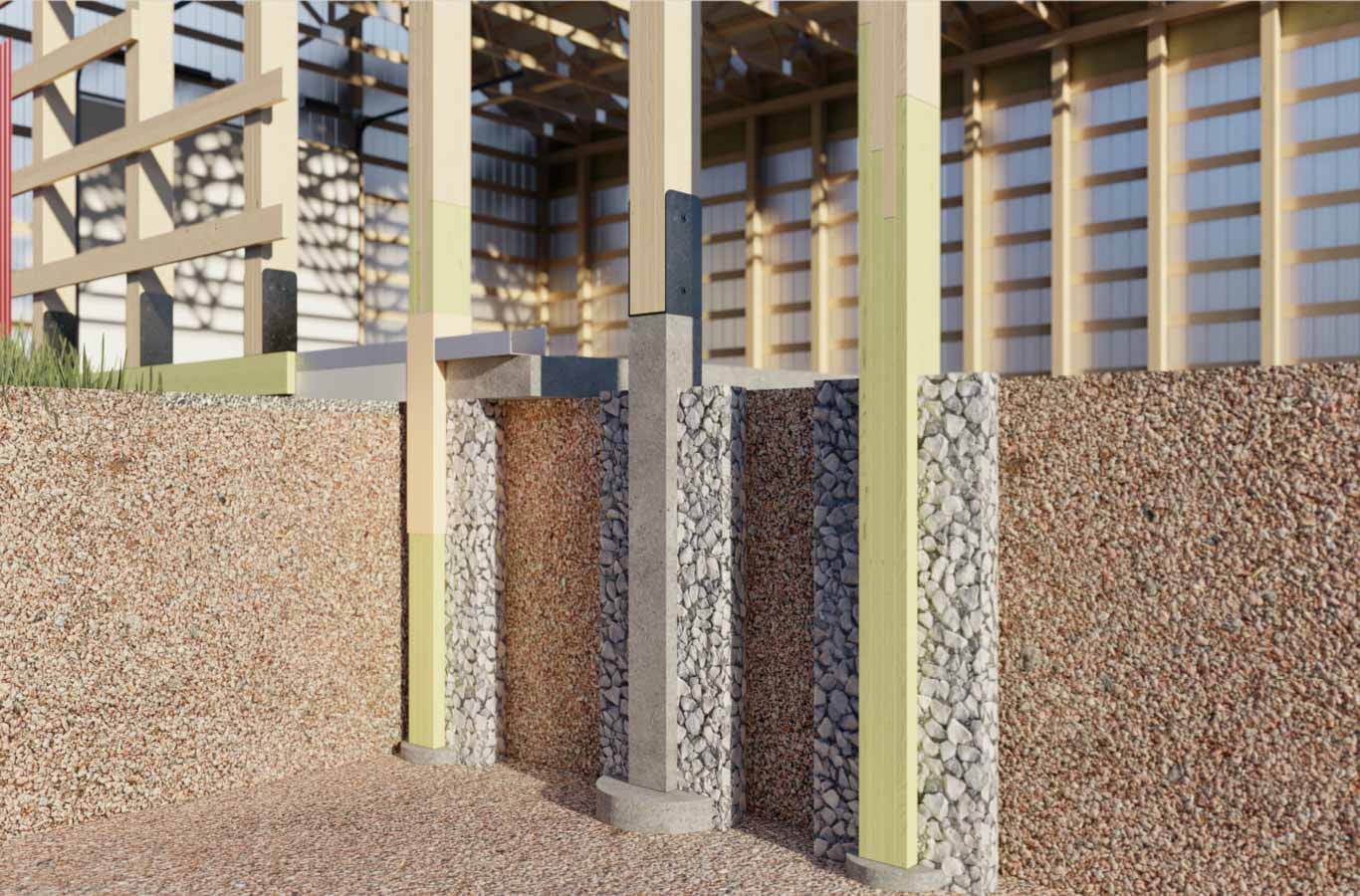
Certain structural decisions play a more influential role in the long-term performance of a post frame home. Foundation design is one of the most important. Options range from embedded wood posts to concrete or steel pier systems, each suited to different site conditions, longevity goals, and budgets.
Effective water management is equally critical. Building wrap behind cladding, properly vented attics, and well-designed soffit and fascia systems help control moisture. Eavestroughs and downspouts should move water away from structural posts to protect the foundation and exterior finishes.
8) Plan Entry Points Around Daily Routines
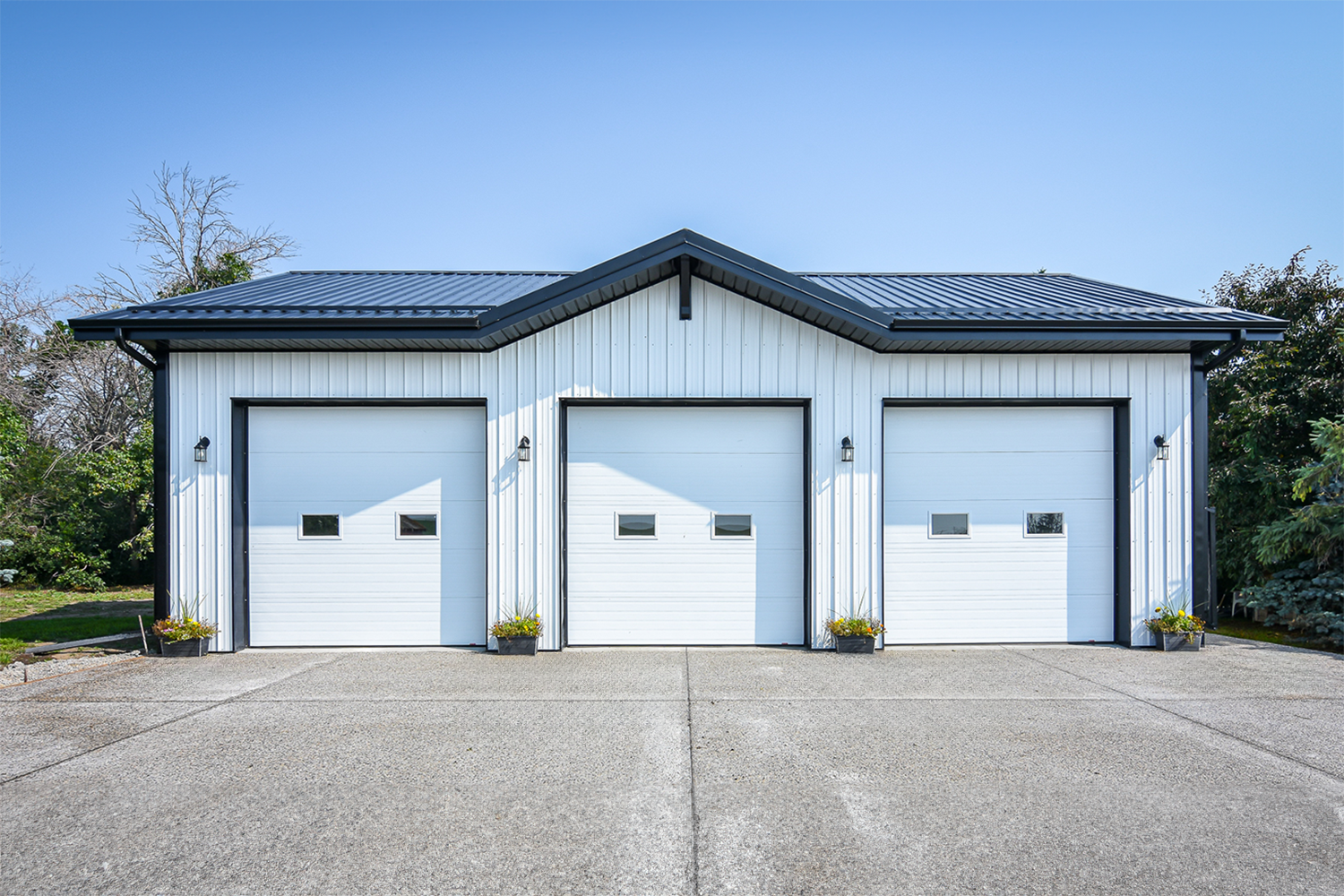
Door placement has a significant impact on how your home functions day to day. Overhead equipment doors should align with driveway approaches and allow space for safe turning. Man doors are best placed on short, well-lit paths and, where possible, under porch roofs that shield entries from snow and rain.
Inside the building, separating vehicle parking from family living areas improves safety and organization. Traffic flow should be intuitive—from driveway to interior—reducing clutter, improving efficiency, and making daily routines easier.
9) Work With Experienced Builders To Finalize Post Frame Home Plans
While planning is exciting, it can also feel overwhelming. An experienced post frame home builder brings clarity to the process—helping align budgeting, permitting, engineering, and construction into one cohesive plan.
Working with a builder who specializes in post frame homes ensures your design is structurally sound, properly engineered, and built with the craftsmanship your dream country home deserves.
“The right partner turns decisions into a durable building that fits your life.”
Planning Summary Table
| Planning area | Key decision | Quick check | Impact on performance & cost |
| Budget & scope | Set total project budget | Account for land, site work, utilities, and build | Sets realistic expectations early and prevents overspending |
| Code & permits | Confirm setbacks, heights, engineering details | Verify requirements with the county early | Prevents delays, redesigns, and permitting conflicts |
| Location & orientation | Select building location and orientation | Confirm drainage, access, and distance to utilities | Site constraints and prep work directly influence post frame home plan costs |
| Identify must-have features | Prioritize most essential features | Map daily routines and adjacencies | Sets non-negotiables early so the finished home reflects your vision |
| Size & height | Set building footprint and clearances for current and future needs | Confirm tallest, widest vehicles will fit in the workshop | Drives required materials; influences post frame home cost |
| Plan type | Choose a standard post frame home model or a custom design | Evaluate how well standard plans fit your needs | Standard plans often improve cost efficiency and planning timelines |
| Foundation system | Select foundation system based on budget and longevity goals | Soil moisture, frost depth, and drainage | Upgraded foundation systems increase material cost but enhance durability |
| Weather details | Roof pitch, overhangs, ventilation | Track drift patterns and sun exposure | Reduces condensation and maintenance. |
Solid decisions at this stage keep the structure working for you, not against you. Good planning shortens timelines, improves the final structure, and keeps post frame home cost focused on value.
How to Choose the Right Post Frame Home Plans for Your Property
Choosing the right post frame home plans starts with a clear understanding of how you will use the space each day. A well-designed residential shell aligns height, footprint, and equipment door placement with your vehicles, hobbies, and future plans. Site orientation, soil conditions, and climate expectations influence foundation type, roof pitch, and overhangs that protect the structure through seasonal weather. Strong plans set the stage for a durable shell to lock-up that supports both comfort and long-term value.
A contractor-built approach brings engineering oversight, predictable scheduling, and consistent workmanship across foundations, framing, cladding, and door installation. This path reduces uncertainty because an experienced team evaluates site grades, access, frost depth, and exposure before finalizing details such as Standard, Grade Guard, or Perma-Column foundations. It also ensures soffit & fascia, building wrap, eavestroughs & downspouts, and ventilation are installed correctly so the home performs as intended. Daily routines feel smoother when doors, windows, and porches are placed with intention rather than guesswork.
- Purpose clarity: Confirm the balance of living, shop, or hobby use so layout and door choices fit your routine.
- Right-sized footprint: Match width, depth, and height to vehicles, storage needs, and realistic future expansion.
- Site conditions: Grade, drainage, and frost depth guide foundation decisions and overall building placement.
- Structural reliability: Look for engineered plans with clear notes on trusses, posts, and ventilation requirements.
- Climate alignment: Design overhangs, roof pitch, and water control to handle snow, wind, and spring melt.
- Daily flow: Place overhead and man doors to simplify winter access, parking, and clean movement between zones.
- Aesthetic fit: Choose wainscoting, porches, colour selections, and clean rooflines to match your style without compromising structure.
A fully built post frame home shell offers a dependable path for owners who want engineering certainty, long-term durability, and a streamlined process. A strong partnership with experienced builders keeps decisions grounded in how you actually use your land and your home. Clear plans, thoughtful site work, and structural detail lay the foundation for a space that serves you well for years.
How Remuda Helps You Bring Your Post Frame Home Plans to Life
At Remuda Building, we help families across Alberta, Saskatchewan, and British Columbia turn post frame home plans into homes designed for rural living. Our role is to simplify the planning process, provide clear guidance, and construct high-quality post frame home shells to the lock-up stage with exceptional craftsmanship and attention to detail. Clear communication, site-specific engineering, and attentive workmanship are how we go Above & Beyond Ordinary.
Every residential project is supported by a dedicated Barndominium Specialist who focuses exclusively on post frame homes. With experience in residential construction, they take the time to understand your property, how a post frame home can support your lifestyle, and what matters most to your vision. The result is a home that’s thoughtfully planned, efficiently built, and ready to support your family’s life in the country for years to come.
Post Frame Home Plans: Common Questions & Straight Answers
Clear answers help you set expectations and organize choices. These points match common search questions and turn them into steps you can act on. Each response focuses on plain language and practical detail. Use them as a starting point before speaking with a Building Specialist.
Post frame home plans are a coordinated set of architectural, structural, and engineering drawings that show how a post frame home will be built. They typically include floor plans, elevations, foundation and roof plans, and structural details tailored to your layout, site conditions, and local requirements. Together, these plans guide permitting, pricing, and construction—ensuring the finished home functions as intended and performs well long term.
Successful post frame home planning follows a clear sequence. It starts with setting a realistic budget and defining how you want to live in the space. From there, interior layout, building size, and site conditions are considered together before structural and foundation details are finalized. Planning in the right order helps avoid redesigns, controls post frame home cost, and keeps the build process predictable.
Post size is determined by engineering, not preference. Factors such as building height, roof loads, spacing between posts, soil conditions, and local climate all influence the correct post dimensions. Using engineered specifications ensures the structure is properly supported and meets code requirements. Post size should always be selected as part of a complete, engineered post frame home plan.
Posts can be supported by concrete in several ways, depending on the foundation system used. Some designs embed treated posts into concrete below grade, while others use concrete piers or brackets that support posts above grade. The appropriate method depends on soil conditions, frost depth, moisture exposure, and longevity goals. These decisions are typically made during planning and engineering, not on site.
There is no single “best” foundation for every post frame home. Common options include embedded treated posts, protected systems such as Grade Guard, or concrete pier systems like Perma-Column. The right choice depends on soil conditions, water exposure, frost depth, budget, and long-term durability expectations. A properly engineered foundation matched to your site delivers the best performance over time.
A post frame home kit is a packaged set of structural materials—typically including posts, trusses, and framing components—designed to be assembled on site. Kits may suit experienced builders or property owners managing construction themselves, but they often require the homeowner to coordinate engineering, permitting, inspections, and sequencing. Many homeowners prefer a builder-led approach when planning a post frame home to reduce uncertainty and ensure the structure is properly designed and executed.