KEY TAKEAWAYS
- Canadian winters aren’t barriers—they’re opportunities to build smarter. With the right methods, even sub-zero conditions can become a productive time to build a post frame.
- Detailed planning before the freeze ensures winter success. Early permitting, material ordering, and site preparation allow projects to proceed efficiently despite snow and frost.
- Cold weather puts a new building to the test early, and a post frame constructed in winter has the chance to demonstrate its year-round durability right away, even though all properly engineered buildings are designed to handle snow, wind, and frost regardless of when they’re built.
- Hands-on project support is essential for staying on schedule. Experienced crews manage safety, adapt to weather, and maintain open communication to keep every phase on track.
- Winter builds deliver year-round advantages. From faster permits to earlier occupancy in spring, starting construction in winter creates lasting value and confidence in your structure.
Canadian winters are tough, with brutal temperatures and heavy snow that test everything built on the land. But for rural landowners looking to build post frames in winter, the cold season shouldn’t be a dead end–it’s a call to build smarter. With the right approach, dedicated pole barn builders, and smart preparation, even the coldest months can become a successful season for building a post frame structure. In fact, winter construction has its own advantages if you plan well: contractors are often more available, permits can process faster, and a project started in January can be ready for use by spring. This guide will show you why winter should not limit your plans, and how smart, meticulous planning and proven building techniques make cold-weather construction not just possible but advantageous.
“Challenging doesn’t mean impossible. With smart strategies, winter becomes just another factor to engineer around.”
Winter Calls for a Smarter Approach to Building
Winter in Canada has a way of exposing any weakness–certainly in buildings. Frigid temperatures, snowstorms, and frozen ground create conditions that demand a more thoughtful construction approach than a mild summer day. It’s no wonder many projects traditionally slow down in winter; in fact, data shows a 36% drop in construction vehicle activity between October and December as the deep cold sets in. Fewer daylight hours and weather delays can cut into productivity, so every move on a winter build needs to be deliberate and efficient.
Yet “challenging” doesn’t mean “impossible.” With smart strategies, winter becomes just another factor to engineer around. A smarter approach means anticipating the cold and adapting to it—from how crews schedule work to the techniques used onsite. Instead of viewing snow and frost as obstacles, consider them signals to build with greater care. Tasks like levelling and grading the building pad require proactiveness to complete before ground freezes, so the rest of the construction process can move ahead smoothly. The reward for this extra diligence is a building that stands strong when it matters most—during the worst that a Canadian winter can throw at it.
The Cost of Not Building Smart in Winter
Ignoring winter’s challenges can be costly. Projects that push ahead without adapting will likely face delays or rework. Construction efficiency can drop by up to 50% in harsh cold conditions if crews are battling frozen materials or pausing constantly for weather. Moreover, attempting warm-season methods in winter, such as trying to pour concrete without adequate heat control, risks the integrity of the build. A single cold snap can stall progress or damage improperly protected foundation elements.
Smart building isn’t about working despite winter—it’s about working with it, using seasonal constraints as guidelines for what to do differently. By acknowledging winter’s realities from the start, you can avoid costly setbacks and keep your timeline steady.
Planning Ahead Turns Cold Weather into an Ally
If you’re wondering “can you build a post frame in snow and frost?”, the answer is yes–with planning. The key to winter post frame building is to plan meticulously ahead of time. When you line up all the pieces before the ground freezes, cold weather can actually become an ally. How? For one, a well-planned winter project often faces less competition for permits and trades. While everyone else is waiting for spring, you can secure faster permit approvals and lock in contractors who have more availability in the off-season.
Secure Permits, Materials and Crews Early
Winter projects succeed when all preliminaries are sorted out early. That begins with choosing your builder first, since permit applications require drawings, engineering details, and design certainty. Once the design package is prepared, submitting permit applications in the fall positions you to break ground in mid-winter. Many municipalities see a lull in applications during this season, so approvals can move faster and avoid the spring backlog.
Material readiness is another key advantage of early planning—materials such as lumber, metal cladding, and any required concrete products can be ordered and staged well ahead of construction. This prevents delays from mid-winter logistics issues and ensures crews have exactly what they need when the work begins. Material suppliers often have better stock availability in the off-season, and materials can be secured at stable pricing before spring demand increases.
Finally, lining up your construction crew early is essential. Top post frame builders appreciate clients who plan ahead—it allows them to schedule the right team, equipment, and winter-specific tools during a season when many other projects are waiting for warmer weather.
Timing Is Everything–Use Weather Windows
Planning for winter construction also means being strategic with timing. Some steps simply need to be completed before the deep freeze sets in—especially pad preparation and dirt work to level the building site. This is distinct from excavation or drilling post holes; pad prep is about creating a properly graded, level surface for the structure. Doing this in fall ensures the site is ready for equipment and crews once winter work begins.
Beyond these early steps, keeping an eye on long-range forecasts helps you take advantage of milder weather windows. For example, if a January Chinook is coming, your building crew might work long hours to get ahead of schedule or make up for missed time during extreme cold snaps. Conversely, when a deep freeze or heavy snow is expected, they’ll avoid starting work that requires precision or moisture-sensitive materials.
A well-planned winter project builds flexibility directly into the schedule—buffer days for storms, contingency plans for cold snaps, and strategic sequencing to keep progress moving. By doing this, you turn winter’s unpredictability into just another variable to plan around rather than a roadblock.
Site Preparation Turns Frost to Your Benefit
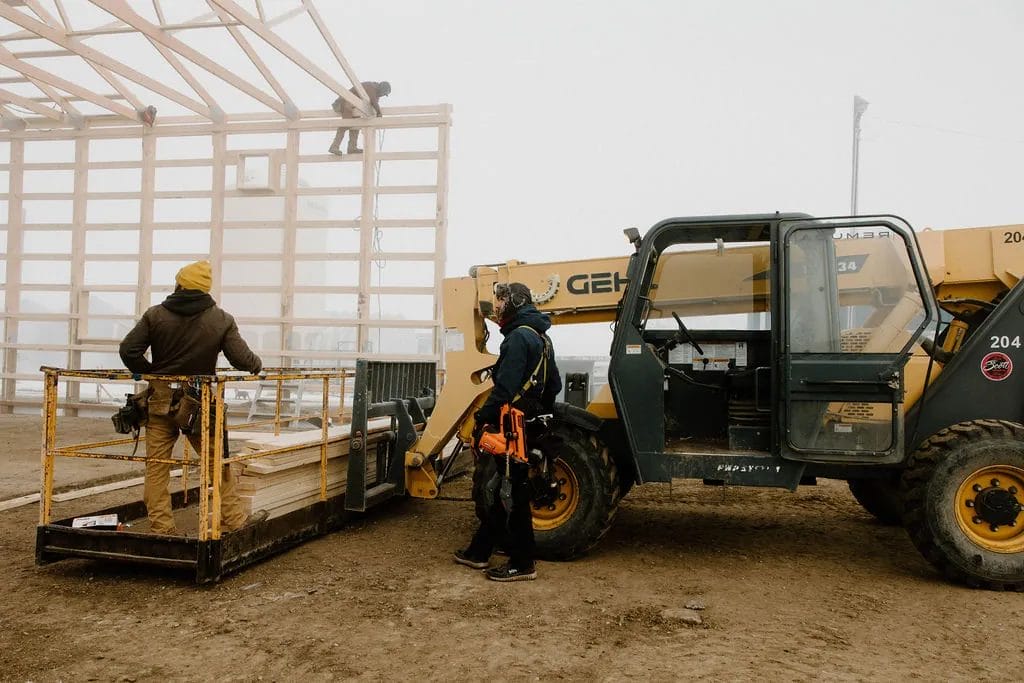
Believe it or not, frozen ground can be helpful for heavy construction, as long as the site is prepared before the deep freeze sets in. During milder seasons, rain and mud can bog down equipment and leave deep ruts across your property. In winter, the firm, frozen surface can support telehandlers, skid-steers, and trucks without sinking in. This doesn’t just benefit the build crew by removing stuck equipment or poor access—it also benefits you as the property owner, because there’s far less site disturbance to repair once construction is finished.
In many parts of Canada, frost penetration under snow is only about 30 cm (1 ft), and the stable winter ground often allows easier excavation than muddy spring soil. That’s why pad preparation—levelling and compacting the building pad—is ideally done before the freeze. This step is typically handled by the property owner or an external dirtwork contractor. Once the pad is prepped and construction begins, modern auger bits handle frozen ground well, allowing crews to drill post holes efficiently, even in winter.
Excavation in frozen soil also tends to hold its shape better, so trenches for utility lines that bring electricity, natural gas, and water to the building can also be completed in the winter. The sides of holes and trenches are less likely to slump, and there’s generally less groundwater to manage during winter work. When approached with the season in mind, the frozen ground becomes a stable, predictable work platform rather than an obstacle.
Winter Proves the Strength of Smart Design
A Canadian winter isn’t just something your build team endures–it’s the ultimate test for the building itself. Winter proves the strength of smart design choices made early in your post frame project. When your building is engineered to handle heavy snow loads, biting winds, and frost heave, you’ll see those benefits pay off immediately. Rather than waiting a full year to experience all seasons, a winter-built post frame faces its toughest conditions upfront. This means you can step into your new horse barn, workshop, or riding arena confident that it’s battle-tested from day one.
Engineered for Snow, Wind and Frost
Smart post frame design in Canada’s climate starts with structural resilience. Roof trusses and columns must be sized for the extreme snow loads that parts of the Prairies and Western Canada routinely experience. For example, several regions in Alberta and Saskatchewan saw unusually heavy, prolonged snow this past winter—enough to strain older barns and shops not engineered for modern snow load requirements. It’s a clear reminder that robust engineering isn’t optional in Canada; it’s essential.
A well-designed post frame building incorporates features such as trusses rated for high snow weight and spaced closer together for greater strength, and properly spaced purlins and truss plates that resist buckling under drifted loads. Beyond roof design, post frame engineering also adapts structural details to the specific site: post thickness, post spacing, lateral bracing patterns, and diaphragm design are all calibrated to local load requirements. Many buildings also include uplift protection—such as uplift blocks, uplift cleats, or embedded brackets—to secure posts against shifting or vertical uplift during severe wind events.
Recent updates to Canadian building standards reflect these realities as well; snow load requirements have increased in several Western regions to account for changing winter extremes. Foundation design is another critical piece. In cold-weather climates, posts must extend below the frost line to prevent heaving as the ground freezes and thaws. Backfilling posts with washed rock as opposed to clay allows water to drain away from the posts and prevents issues when water freezes. For heated buildings, insulating slab perimeters helps maintain stable ground temperatures and protect the foundation. These engineering choices ensure that when temperatures plunge to –30 °C, winds pick up across open fields, and the winter ground turns rock solid, your post frame structure remains stable, durable, and unmoved.
“A post frame building built in winter shows its resilience early, standing up to real Canadian weather even as construction is underway.”
Materials and Techniques that Withstand the Cold
Design strength isn’t just about calculations on paper—it’s also about the materials and construction techniques used on site. Winter construction demands that materials perform reliably in low temperatures. Lumber, for example, actually becomes slightly more rigid in the cold, which can benefit framing (though it may require a bit more effort when fastening). Fasteners and hardware must be rated for outdoor conditions so they don’t become brittle. And if the building will eventually be insulated and heated, installing proper building wrap, vapour barriers, and attic vents during construction—even in subzero temperatures—helps ensure moisture stays controlled when the building is closed in. Compared to post frames built during the summer, nothing really changes in terms of materials.
Concrete, however, is one area where winter requires careful consideration. While cold-weather concreting is a well-understood practice, it is not commonly used for post frame construction in winter unless specific heating and protection measures are available. Most column footings and concrete bases are pre-cast in controlled environments to negate the effects of freezing temperatures, while interior concrete slabs are typically scheduled for spring or summer after the building is finished and enclosed. In the rare cases where winter concrete work is necessary or requested by the customer, heated water, cold-weather admixtures, and insulated blankets or temporary enclosures can be used to keep the pour above freezing until early strength is reached.
What matters most is that every component is installed using techniques suited to winter conditions. A post frame building constructed in cold weather doesn’t rely on different engineering; it simply benefits from careful planning and attention to detail while being assembled in the climate it’s designed to withstand year-round.
Hands-On Support Keeps Winter Projects on Track
Even with great planning and design, winter construction throws curveballs. This is where having a hands-on, experienced support team makes all the difference. When you partner with a builder who knows winter inside and out, they act as your guide through the season’s challenges. They’ll be out there checking that crew safety is maintained, and that the schedule adjusts smoothly to any weather delays. In short, expert support keeps your winter post frame project on track.
A big part of this support is safety and productivity management. Cold weather requires extra precautions for workers: warm-up breaks, proper winter gear, and constant vigilance for hazards like ice. Statistics back up how crucial this is–workplaces see about 11% more slip-and-fall injuries in the winter months in Canada, so a safety-minded crew lead can’t afford to be lax. They will keep walkways cleared and sanded, supervise the use of temporary heaters or lighting, and enforce protocols when a snowstorm hits the site. This hands-on approach protects both the people and the progress of your project.
Communication is another facet of support during a winter build. A good project manager will keep you informed and involved, updating you on how the weather is affecting tasks and what they’re doing about it. For example, if high winds one week mean rescheduling the truss installation, you’ll know the new plan immediately. They might also involve you in quick decisions–say, choosing to temporarily close in a partially built structure with tarps so interior work can continue during a cold snap. This level of collaboration ensures that you, as the owner, feel confident and in control despite the volatile weather. Winter building is a team effort, and with a reliable team, even surprise blizzards become manageable.
Build in Winter and Benefit All Year
When you take the leap to build during the coldest months, you’re not just overcoming winter. You’re reaping rewards that last long after the snow melts. Here are some major benefits of starting your project during winter and how they pay off year-round:
- Ready by when you need it: By building in winter, your new calving barn, insulated farm shop, or agricultural storage building will be up and functional by spring or calving season. That means winter construction for agricultural buildings aligns well with busy farming seasons. No calving through another cold winter or putting up with construction on your property during planting or harvest.
- Optimal contractor availability: Winter is typically a quieter season in the construction industry, which means high-quality builders can often schedule your project sooner and keep it moving steadily. With fewer competing projects, crews can plan their workflow more efficiently and maintain consistent momentum from start to finish.
- Faster permit approvals: Many people hold off projects until spring, resulting in a rush at permit offices. In winter, permit applications face less backlog, so you could see quicker approvals and inspections. This streamlines your timeline and reduces red tape holdups.
- Off-season cost stability: Winter construction often comes with more stable material prices and potential off-season discounts. Suppliers might offer deals in winter due to lower demand. And since you lock in costs earlier, you may avoid the price hikes that sometimes happen each spring.
- Solid ground for heavy work: Frozen ground, when the building pad and site prep are completed beforehand, provides a firm base for equipment. Telehandlers, delivery trucks, and skid steers can operate without sinking into mud, making tasks like setting trusses or moving materials more efficient than during wet seasons. An added benefit for the property owner: frozen ground results in fewer ruts and less site disturbance, meaning significantly less cleanup and remediation once the building is complete.
- Year-round durability testing: A structure built and proven in winter gives peace of mind. If your building can handle snowstorms and deep freezes during construction, it will easily handle ordinary weather later. Essentially, you’ve already validated the building’s resilience under extreme conditions, which is a long-term benefit for durability and confidence.
In short, choosing to build in winter sets you up to enjoy your investment sooner and often with less hassle. It flips the script: rather than winter being lost time, it becomes productive time that propels you into a successful year ahead.
Remuda Building has designed and built custom post frame buildings for farms, acreages, and rural properties across Alberta, British Columbia, and Saskatchewan since 2014. Explore our diverse range of projects in our portfolio.
Common Questions About Winter Post Frame Building
Yes, you absolutely can. Post frame construction can be done in winter as long as the process is adjusted for the weather. Builders in Canada do it every year. The key is preparation: for example, clearing snow from the site, ensuring site prep to grade and level the building pad is completed before frost, and scheduling work around extreme cold or storms. The structural techniques remain the same – you’re still setting posts, framing, and cladding – but you use winter-ready methods to ensure everything comes together in the same way as any other season. Many post frame crews even prefer winter for certain tasks because the frozen ground can support equipment better than muddy spring soil. In short, building in snow is feasible with the right expertise, and it won’t compromise the quality of your building as long as precautions are taken.
In most cases, concrete work for post frame buildings is scheduled for spring or summer when temperatures are easier to control. Pre-cast concrete bases and footings, where necessary, are used to set and support posts, so this step of construction is not dependent on pouring concrete. Interior concrete slabs and exterior aprons are poured after the building is enclosed, and are typically planned for warmer months unless special conditions allow otherwise.
That said, winter slabs can be completed when necessary, and the process is well-understood. Modern augers handle frozen ground effectively, allowing crews to drill post holes even when the frost sets in.
When posts are set, the key is proper backfilling. Posts are always backfilled regardless of foundation type, and crews ensure the backfill material is free of frozen clumps so it can be compacted properly. In short, while concrete work is not typically performed in winter, winter post setting and foundation preparation remain entirely feasible with the right equipment and planning. For most projects, the building is completed in winter and the concrete slab is poured later under controlled spring or summer conditions.
It might surprise you, but a winter build doesn’t necessarily take longer or cost more — especially with good planning. While some tasks can be slightly slower (workers may move more carefully on ice, and extreme cold snaps may shut construction down for a few days), other factors help balance things out.
In winter, your builder often has greater scheduling flexibility and closer availability of build dates, which can accelerate when your project actually starts. With fewer competing jobs, crews can often stay on your project more consistently rather than splitting time across a busy summer workload. Materials are typically more available as well, reducing wait times for key components. Builders also plan for winter realities by adding reasonable buffers for storms or cold snaps, so the projected timeline often ends up comparable to a fair-weather build — just with the season-specific allowances built in from the start.
Regarding cost, winter construction may require additional measures such as heating and lighting. But these can be offset by off-season pricing stability, better material availability, and the advantage of starting sooner rather than waiting for peak-season rates or extended spring backlogs. A reputable builder will budget all winter requirements transparently, so there are no surprises. Many clients find that the overall cost is similar to a summer build — and the benefit of completing the project sooner, with earlier access to a finished building, adds significant value.
Safety always comes first. If there’s a blizzard, extreme cold warning, or any conditions that make work unsafe, a good builder will temporarily pause the project. This is another reason why planning and an experienced crew are vital – they’ll have contingency plans for weather delays. Typically, the crew will secure the site before a big storm (tarp over open sections, brace structures, ensure drainage if there’s a thaw followed by freeze). During the bad weather, they’ll wait it out and resume work when conditions improve. The schedule will have some floats to accommodate this. It’s also common to tackle indoor or sheltered tasks if possible during bouts of harsh weather. For instance, if a cold snap shuts exterior work, the crew might move inside to insulate or install metal cladding. Communication is key – your builder should keep you updated on any changes. While a day or two might be lost here or there, it’s common for crews to work long days after the weather improves to make up for lost time caused by extreme cold. Remember, winter may slow things momentarily, but it doesn’t stop them.
Not when it’s done correctly. A post frame building erected in winter should be just as strong and long-lasting as one built in July. The construction techniques are adapted to protect quality at every step. For example, pad prep is prioritized prior to the ground freezing so it’s ready for winter construction . Fasteners are all driven securely (if it’s extremely cold, some builders might even pre-drill certain nail holes to prevent wood from splitting – an extra quality step). Components like metal siding and roofing are installed carefully so that cold-brittle materials aren’t overstressed – but since steel and most construction materials are engineered for a wide temperature range, this isn’t a problem under normal winter temps. In many ways, winter builds get extra care: workers tend to be more attentive when conditions are challenging, and inspections of things like sealants or insulation are rigorous to ensure no gaps (nobody wants a draft in -20 °C!). Once your building is up, it faces the remainder of winter head-on. If any minor issues were to arise (say a door that swells or a metal panel that creaks), they would show up immediately and can be addressed, rather than remaining hidden. But such issues are rare with a professional build. In the end, your building’s longevity comes down to its design and construction quality, not the season it was built in. A well-built winter project will perform year-round, providing you the same comfort and utility as any other build – and you’ll have the confidence of knowing it withstood its trial by ice from the very start.
Have more questions? Don’t hesitate to ask your builder – they’re there to help demystify the process and put your mind at ease.